
Jun 26, 2026
Lead Them to Paradise: What Dune Tells Us About the AI Race
OpenAI vs Anthropic in the eyes of Dune
Behind The Scenes
0:00 / 0:00
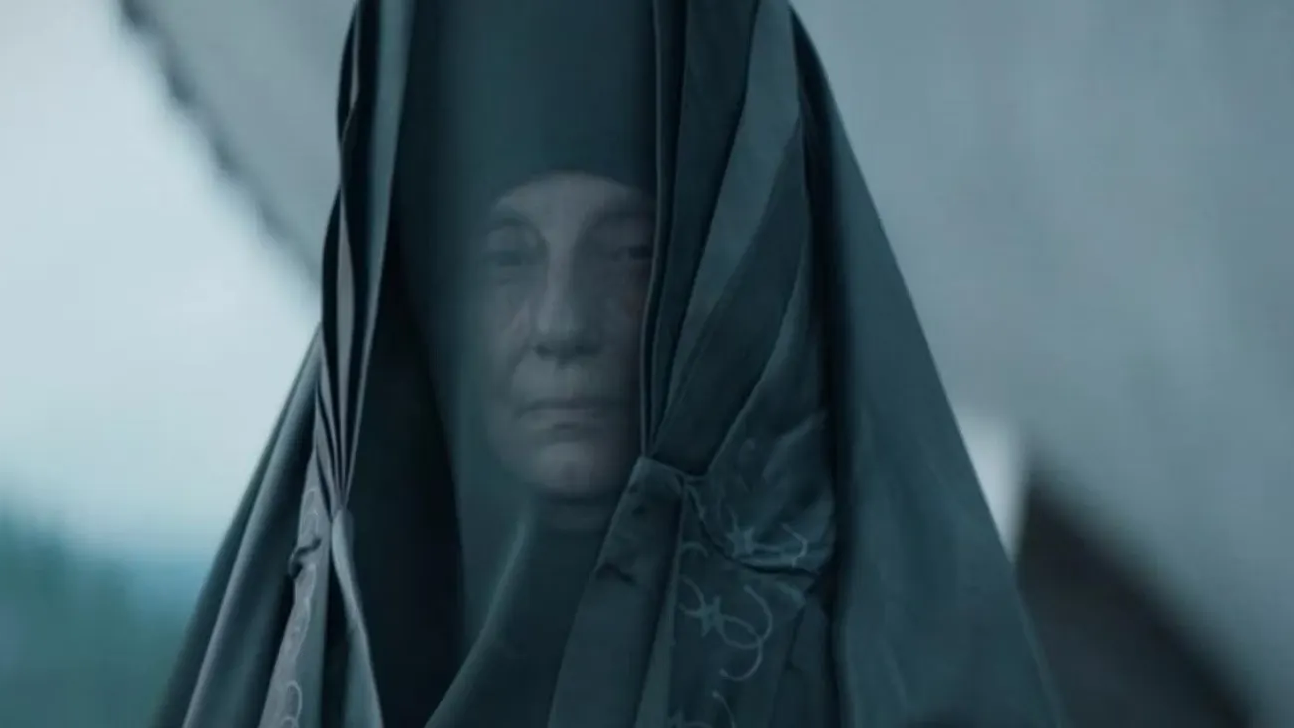
In Dune, the Bene Gesserit are a powerful group of women who pull the strings of the entire universe through mind control, manipulation of bloodlines, and harnessing their ancestors' memories. The sisterhood exists for one purpose: to prepare the world for the Kwisatz Haderach, the prophesied figure who will reshape the known universe. In doing so, the Bene Gesserit don't conquer civilizations. They infiltrate them, planting beliefs and seeding prophecies until the world is ready to receive him.
For me, OpenAI's acquisition of TBPN felt like that. Not a simple media and narrative buy, but a conditioning operation. And Sam Altman is betting he's the Kwisatz Haderach of AGI: the one who democratizes it, makes it work for all of humanity, not just those who built it.
Then, a follow-up question arrived: if Altman is the one betting he's the Kwisatz Haderach, what is Dario Amodei? If TBPN is the Bene Gesserit, who are the Fremen?
I've started connecting the dots, only to realize that the Dune universe is so rich in metaphors about power, prophecy, and the control of precious resources that it maps onto the AI race with an uncomfortable precision. In the spirit of fun, and maybe a little concern about where this is all heading, here's my take on how Dune maps onto the AI war:
I recommend you to read the article with the soundtrack. Just for the vibes.
*A disclaimer: The analogies are far from exact (which ought to be expected when you graft a science fiction epic about feudal desert planets onto the very real, very messy world of AI). This piece draws only from Dune Parts 1 & 2 (the films, not the books). If you have watched the film, you may disagree with them. I welcome your alternate guides in the comments section.
The Cast
"He who controls the spice controls the universe."
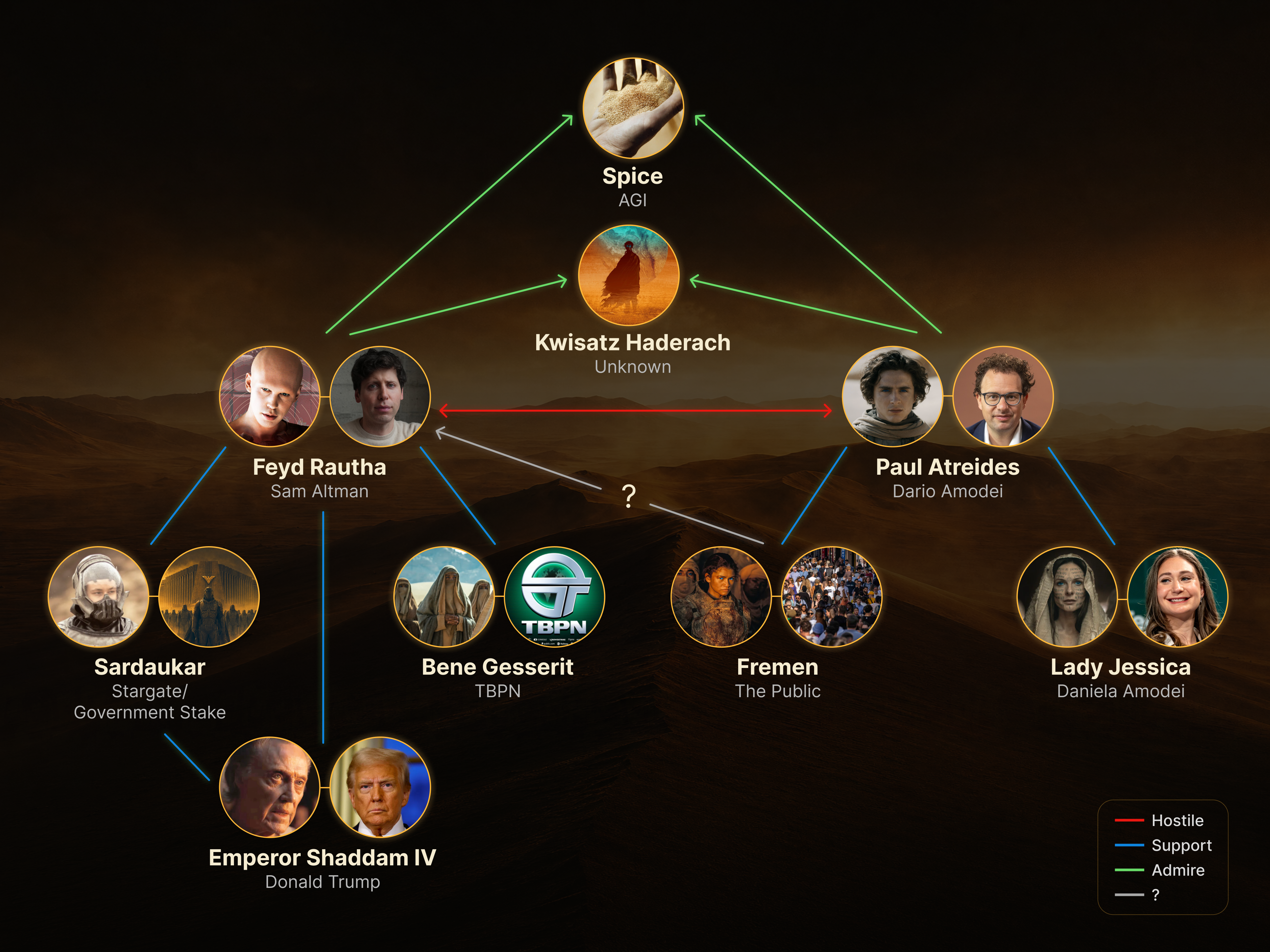
AGI = The Spice
In the AI Dune universe, AGI is the spice. Whoever controls it first doesn't just win a technology race. It rewrites the terms of global power.
Sam Altman = Feyd-Rautha
Feyd-Rautha is the Emperor's chosen champion: charismatic, politically wired, the establishment's bet for the throne. Altman has recently cultivated one of the closest relationships with Trump. Altman stood beside Trump at the G7 summit and is in discussions with the U.S. government about taking an equity stake in OpenAI. He has the Emperor behind him.
Dario Amodei = Paul Atreides
Paul Atreides is Feyd-Rautha's destined rival and the Emperor's greatest threat. When the Harkonnen-Emperor conspiracy destroys his house, Paul lives among the Fremen until they begin to believe Paul is their Messiah.
Anthropic's Claude models grew too powerful for the government to ignore. When it demanded unrestricted access, Amodei refused. Trump froze Anthropic out of federal contracts, restricted its models, and backed Altman to fill the space.
Donald Trump = Emperor Shaddam IV
The Emperor doesn't mine the spice. He controls who does. Trump doesn't build AI. But through executive orders, government contracts, and export restrictions, he determines who advances and who gets kneecapped.
TBPN = The Bene Gesserit
The Bene Gesserit spent centuries planting beliefs and seeding prophecies to shape who rises to power. When Paul is thought dead in Dune Part 2, they pivot to Feyd-Rautha as an alternative. Visibly rushed, because centuries of preparation cannot be replicated in weeks. OpenAI acquired TBPN, an 11-person podcast, and placed it within its Strategy team to shape the narrative race in the tech scene and among the public.
The General Public = The Fremen
The Fremen are the natives of Arrakis who never wanted the spice. Instead, the great houses turned their home into a battlefield for spice. The public is the same: caught between nations and corporations in an AI race they never asked for.
Stargate + Pentagon Contracts = The Sardaukar
In Dune Part 2, the Emperor dispatches his Sardaukar, an elite military force, to secretly fight against Paul. Trump's version is less subtle: a $500 billion infrastructure commitment, Pentagon contracts, and equity negotiations, all flowing to Altman while Amodei's most powerful models get sidelined.
The Kwisatz Haderach = Unknown
The Kwisatz Haderach is the prophesied Messiah who reshapes the known universe. In the AI race, it's whoever first controls AGI in a way the world accepts as legitimate. In the film, it is Paul. In reality, we don't know yet.
Two Roads to the Prophecy
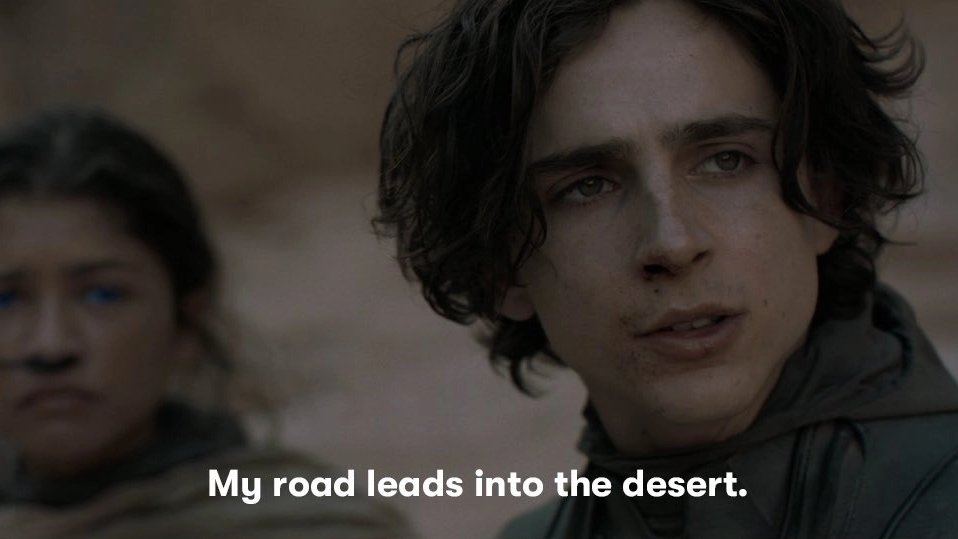
In the AI race, narrative is not simply a PR activity. AI giants that win the public's trust, not just technical benchmarks, will be the one that earns the mandate to build AGI for all.
Similarly, Kwisatz Haderach is a position to be proclaimed. In Dune, the prophecy takes generations to plant and decades of lived action to earn. Legitimacy is accumulated through sustained sacrifice and time. It cannot be faked or announced.
Altman and Amodei are in a race to be the Kwisatz Haderach of the AI race, and they are building that legitimacy in opposite ways.
Altman's Road:
Altman was the first mover. Before any other name in AI was a household word, his was. ChatGPT made him the face of the revolution. The founding premise was explicit: AGI must be developed for the benefit of all of humanity, not controlled by any single company.
But the story that follows got messier. Elon Musk, one of OpenAI's co-founders, walked out after a conflict over control of the organization, which later escalated into a lawsuit. The original nonprofit gave way to a for-profit structure as Altman raised billions from Microsoft and others. His own board tried to fire him for "not being consistently candid in his communications." A 52-page memo from his former colleagues alleged that Altman "exhibited a consistent pattern of lying," accusing him of being the core problem at OpenAI.
All of it accumulated to a single public question:
"Is Altman trustworthy enough to be the Kwisatz Haderach of AGI?"
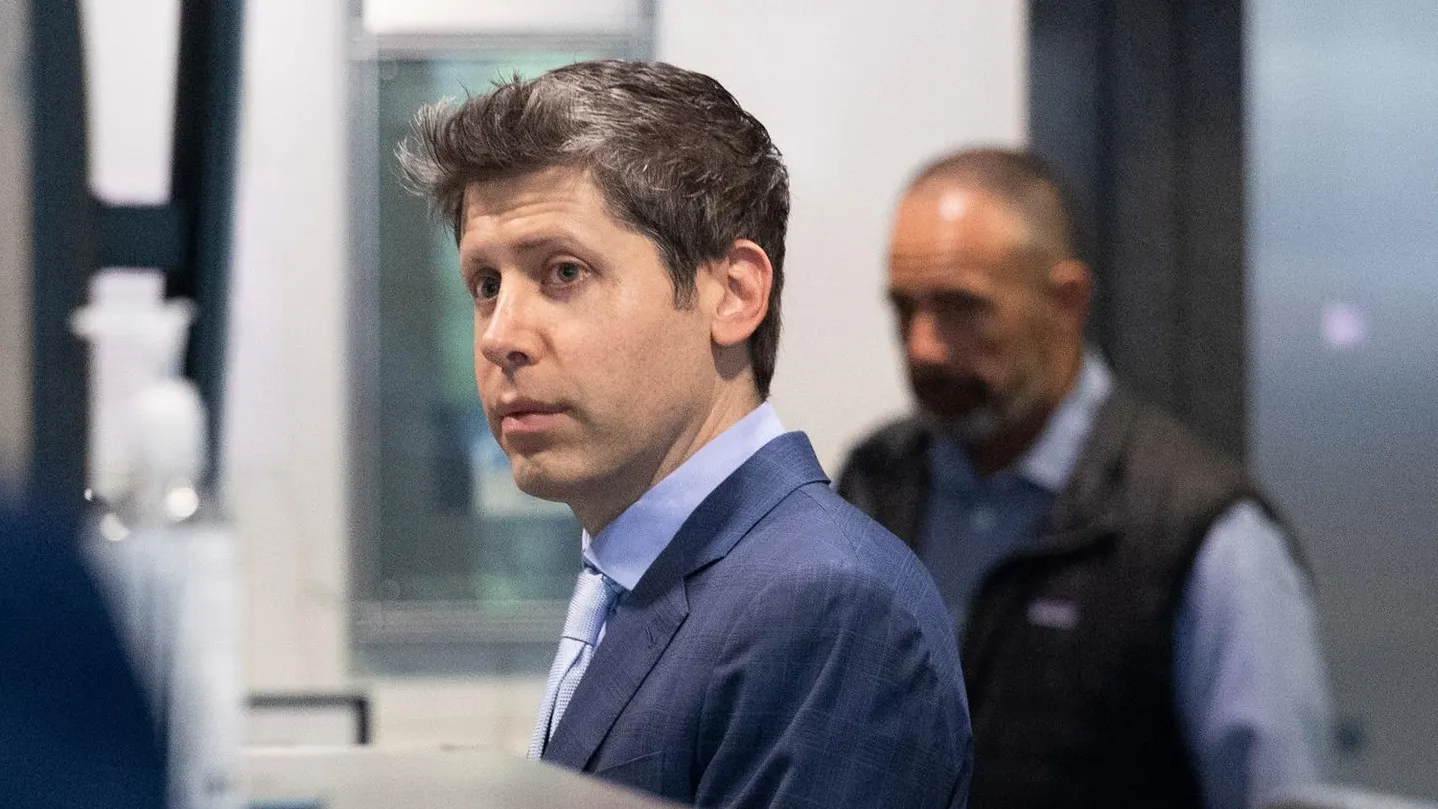
Having lost the ability to carry his own message, Altman reached for TBPN, a podcast whose founder, Coogan, Altman has known for 13 years. OpenAI didn't announce it as their narrative arm. They embedded it quietly within the tech and startup scene, just as the Bene Gesserit became part of the fabric of each civilization they entered: trusted, embedded, native, without ever announcing themselves. A founder watching the show at 11 am doesn't think of themselves as receiving OpenAI's message. They think of themselves as staying informed. The conviction forms quietly, from the inside, in their own voice.
Amodei's Road:
Amodei's convictions for AI safety reach back to Caltech, where, as a sophomore physics student, he was known as an anti-war advocate who believed scientists shouldn't sit in ivory towers. That worldview followed him into AI.
He served as VP of Research at OpenAI, left after seeing a widening gap between the company's stated values and its actual behavior, and took a core team of researchers with him to found Anthropic.
His road itself is proof of how he lived by his belief. Anthropic gave up the $200 million Pentagon contract when the Defense Department demanded unrestricted use. Amodei has been vocal about AI safety and regulations through his blog. Even later, when Fable 5 was restricted days after release, he still made his voice clear at the G7 summit, sitting at the same table as Trump and Altman.
This is like Fremens watching Paul refuse power. In Dune, Fremen's belief deepens each time Paul turns down what is being offered. The refusals are the prophecy. Amodei's credibility is built on what he gave up, not what he was given. The more he is persecuted, the more the public believes.
How the Emperor Backs His Champion
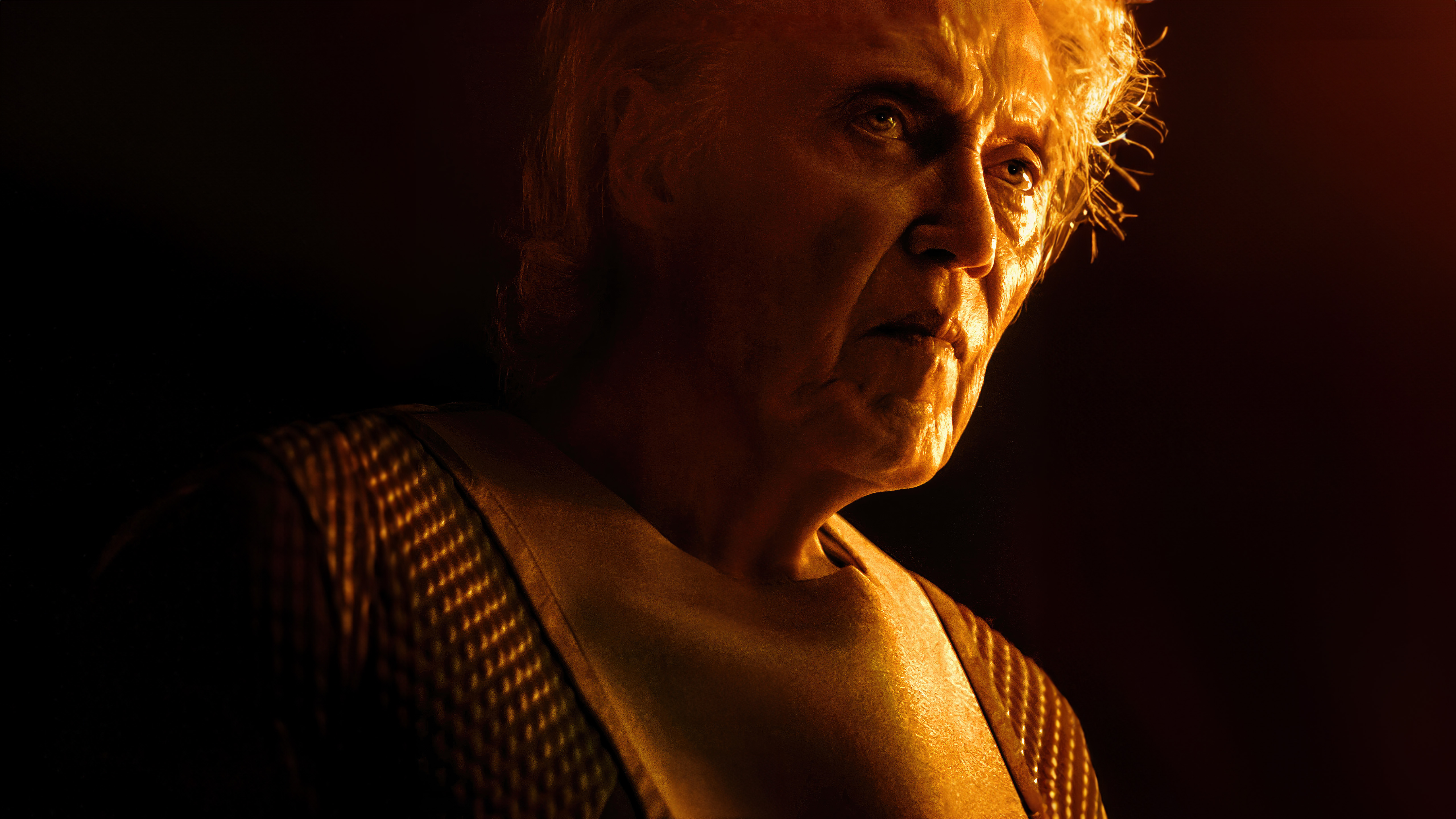
The Emperor does not fight openly in Dune. As he saw the upcoming House Atredies, he conspired with House Harkonnen to destroy them, deploying his Sardaukar in disguise.
In the AI race, Trump's favor does not arrive in a single form. It takes a different form each time.
It arrives as Stargate: a $500 billion AI infrastructure commitment announced from the White House, Altman standing beside Trump. It arrives as Pentagon contracts, replacing what Anthropic has been doing. It arrives as collaborations for the U.S. government to take an equity stake in OpenAI and build together the layout of the 'Public wealth fund.'
Different uniforms. But the same Sardaukar are to attack the rising power.
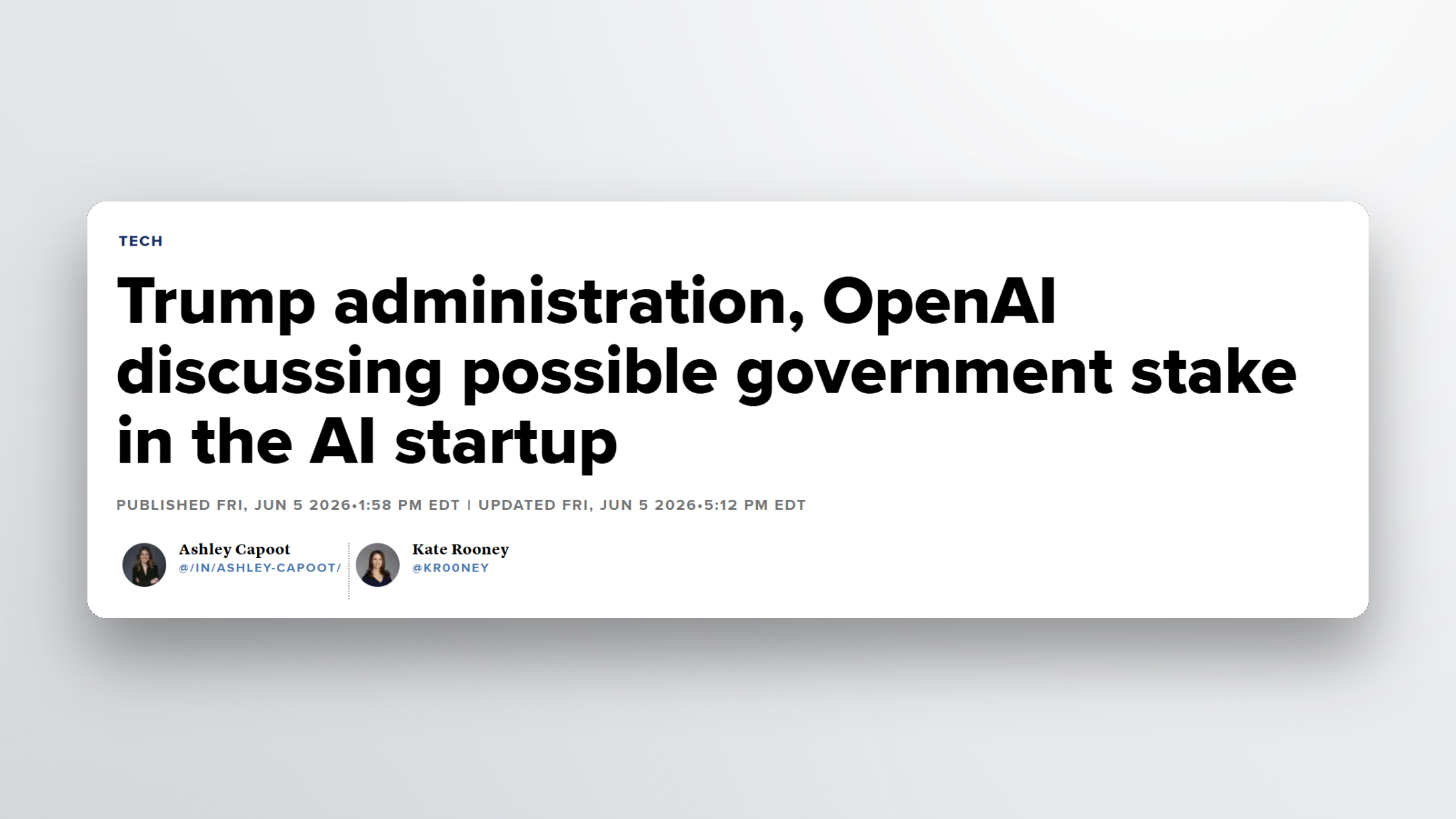
Amodei's house gets the inverse. After the Pentagon contract fell through, the Trump administration labeled Anthropic a "supply chain risk." Then, Fable 5 was disabled for all customers three days after its launch under a government export control directive.
The Emperor's motive is clear: His traditional tools of governance are falling behind and AI regulation hasn't kept pace with AI development. The largest AI companies now carry valuations larger than most nations' GDPs. Their CEOs travel the world, treated as heads of state. The Emperor is not comfortable with this.
If law and policy cannot control them from the outside, he decided to get inside. The Trump administration has already taken equity stakes in companies like Intel and IBM. They are now in active discussions to do the same with OpenAI. Not a contract. Not a policy. A stake. Trump isn't just backing his chosen house. He wants to own a piece of it and maintain his position as the Emperor.
Fremens Didn't Ask For Spice, Neither Did We
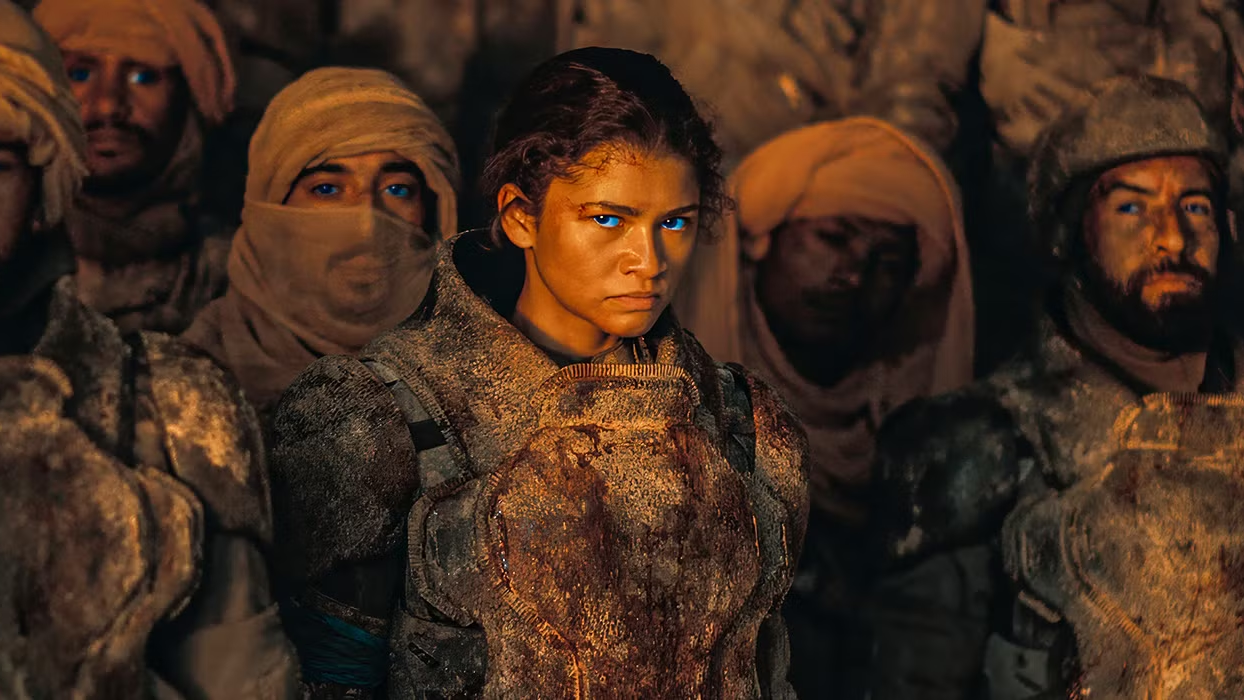
For the Fremen, spice was never a blessing. It was a curse. It drew the great houses to Arrakis and turned their home into a battlefield. They just wanted to be left alone.
The public's relationship with AI is the same.
AI has brought real benefits: productivity, access, and capability. But it has also brought disruption that most people never asked for. Only 26% of the public holds a positive view of AI. It is the second-most unpopular domestic concept in America, behind only the Democratic Party. At graduation ceremonies across the country, students booed when commencement speakers mentioned AI. The public didn't ask for this race.
The problem is, they can't escape it either.
This is exactly why the Fremen were so desperate for a Kwisatz Haderach, out of faith, and out of necessity. They needed someone to lead them through a war they hadn't chosen and couldn't avoid. The public is in the same position: caught between tech companies, with no exit and no say.
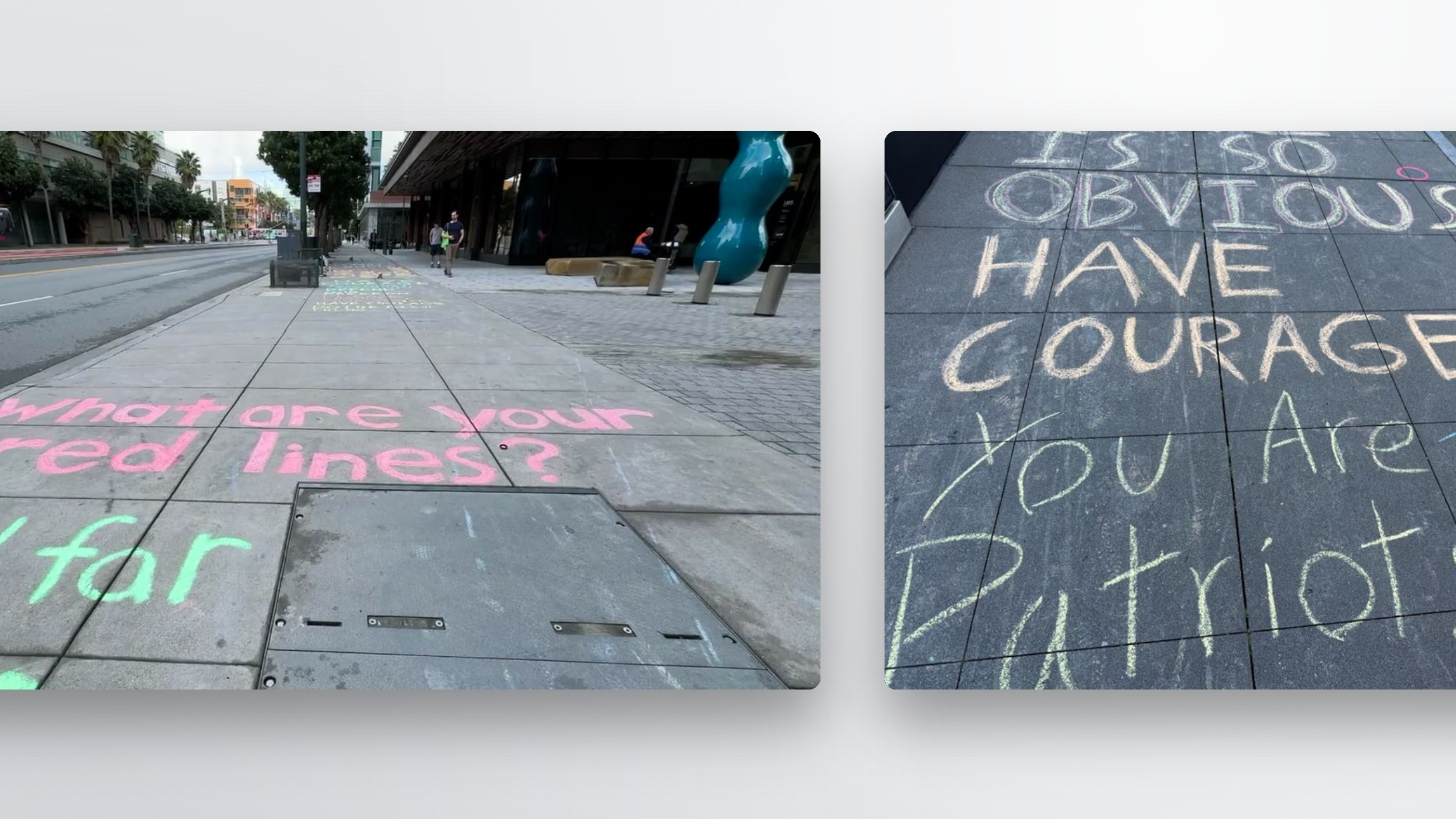
When Anthropic refused to strip its guardrails and accepted the Pentagon ban, something shifted. People showed up outside both offices with chalk. Outside OpenAI's headquarters, the messages demanded accountability. A crowd gathered to warn against the use of AI as a weapon of war. Outside Anthropic's downtown office: messages defending the company's courage. Even many of OpenAI's own employees signed an open letter supporting Anthropic. People are choosing Anthropic not just because it is trusted, but because it feels like it is fighting for them.
The sentiment shows in the numbers too: ChatGPT's share of global AI assistant users fell below 50% for the first time, down from over half the market in January. Claude's monthly users went from 60.2 million in December 2025 to 245 million by May 2026. A fourfold increase in five months.
Lead them to Paradise
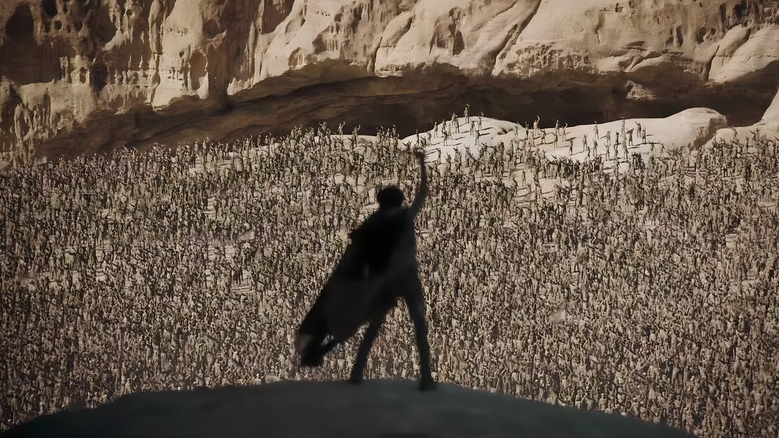
By now reading this piece, you probably think I am trying my best to portray Amodei as the good guy — No. That is not my intention.
You have to note that Dune is not a hero's journey.
While not depicted in the films yet, the holy war fought in Paul's name kills over sixty billion people across the galaxy. Paul is a protagonist. Not a hero. The reason I map Amodei onto Paul is not to crown him, but to show how his genuine convictions about AI safety begin to reveal their own contradictions.
Amodeio warned that AI could eliminate 50% of white-collar jobs. At the same time, his own products helped trigger the SaaSpolcalypse, causing mass layoffs and erasing $285 billion from software valuations. He called for government authority to block unsafe AI, but called the action illegitimate when Fable 5 was blocked. He proposed FAA-style regulation requiring mandatory safety testing, a framework that structurally favors large players who can afford compliance. He has also said he is "deeply uncomfortable with these decisions being made by a few companies," as he runs one of the leading ones.
Following this logic to its end, Amodei may arrive at the same place Paul did: If we don't do it, someone worse will. Paul didn't want to start a galactic war either.
As two companies are preparing to go public, we can see them each offering their own version of Paradise. Altman's: democratizing AGI for all of humanity. Amodei's: Constitutional AI, built on safety and the trust of those who believe he is fighting for them.
Yet, we don't know who would rise as the Kwisatz Haderach of AI. But whether it is Altman, with TBPN quietly conditioning the world to receive him, or Amodei, building with the Fremen's trust, the Paradise they are each promising may not be as green as we imagine.
Explore more