
May 03, 2026
From Prestigious Hedge Fund Quant to $95M Founder
An interview with Annanay Kapila, a founder of QFEX
Founder Focused
💡
At A Glance
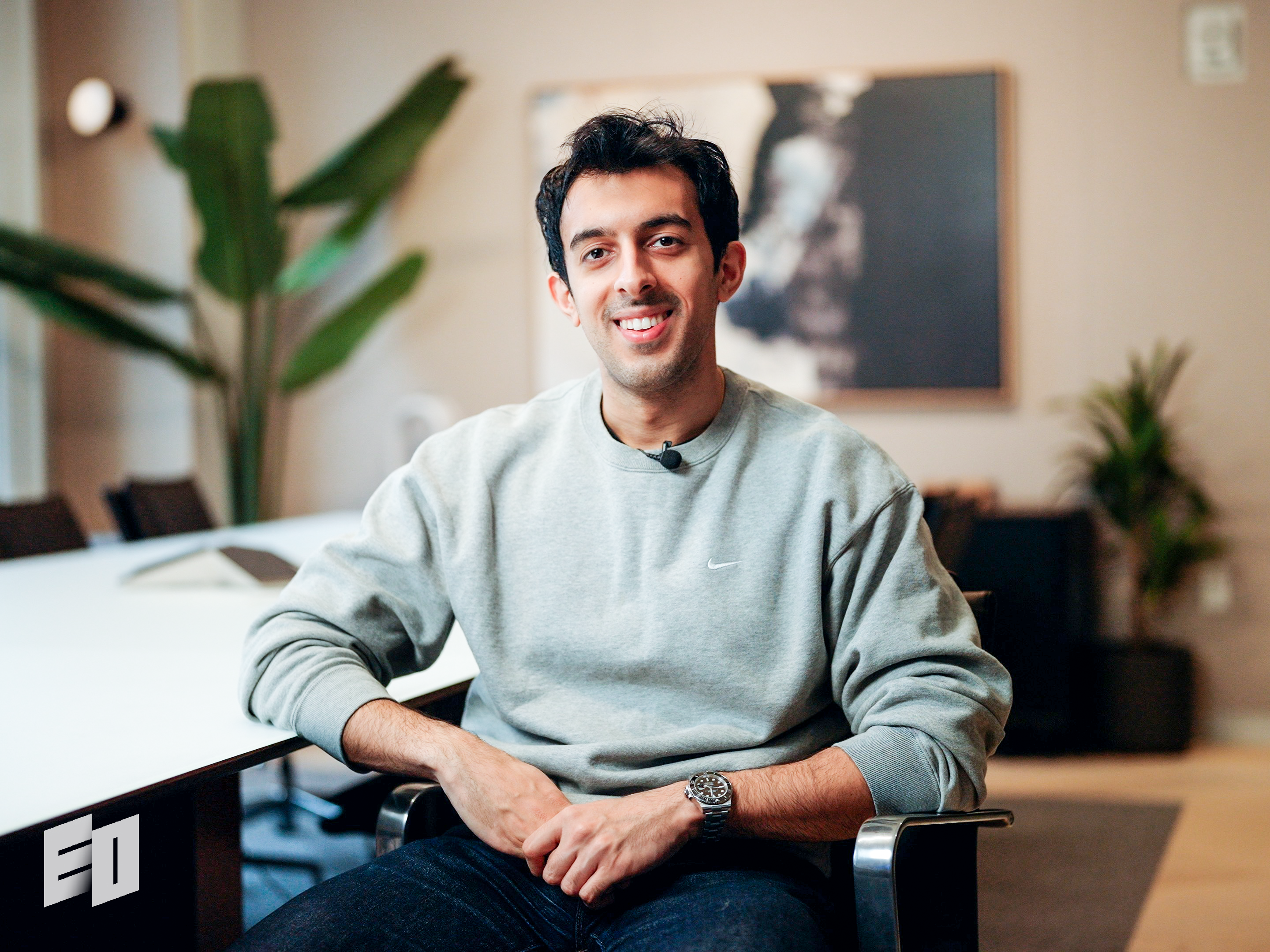
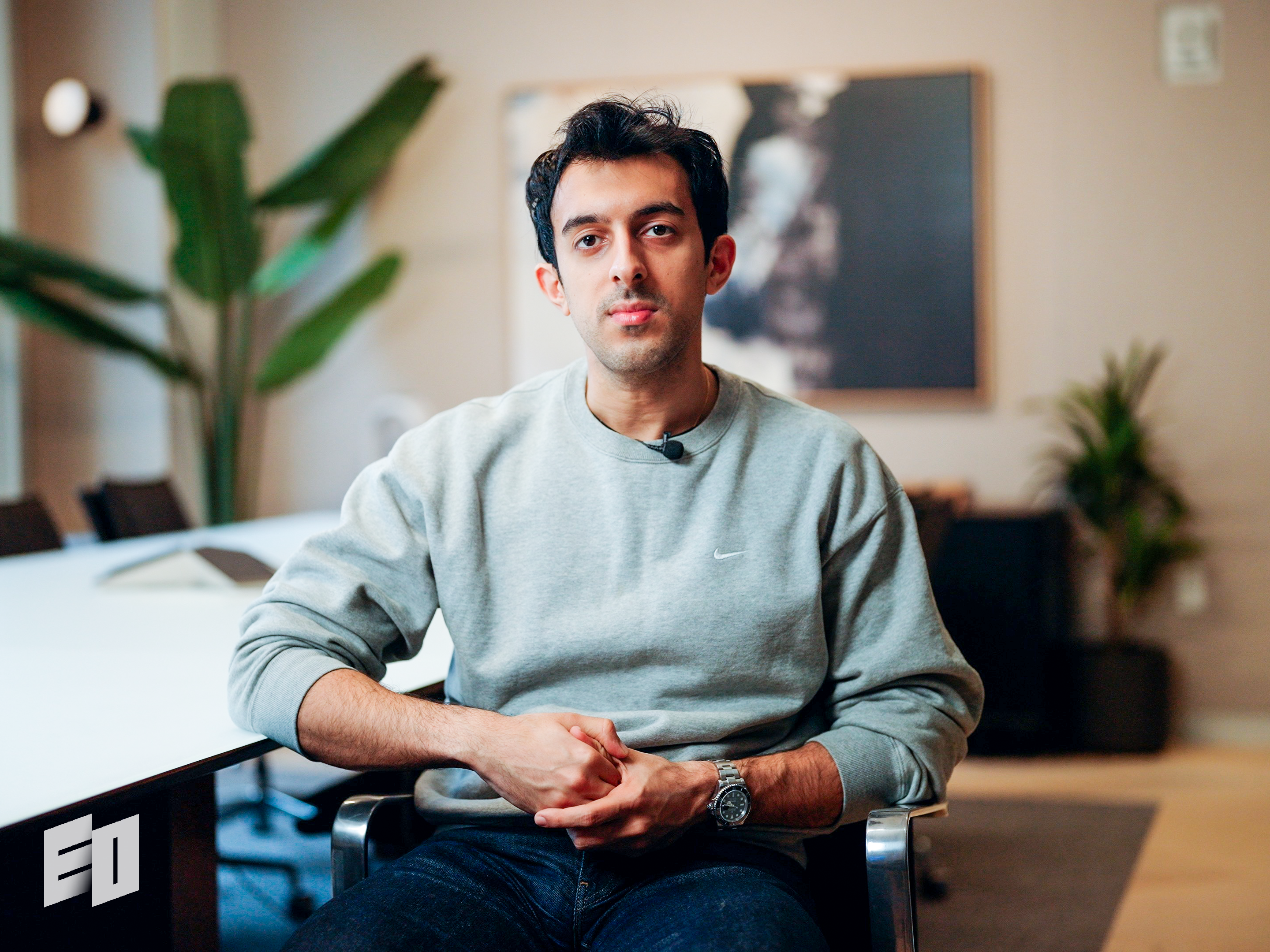
Annanay Kapila is the founder and CEO of QFEX, a next-generation 24/7 global stock exchange built to fix what he believes is fundamentally broken about financial markets. After leaving one of the world's top quant trading firms, he raised at a $95 million pre-revenue valuation and went through Y Combinator to build the infrastructure that could make trading fair for everyone.
In this conversation, he shares why the smartest people in the world are stuck in golden handcuffs, how high frequency trading extracts billions from ordinary investors, and the exchange launch that almost broke everything.
In this conversation, he shares why the smartest people in the world are stuck in golden handcuffs, how high frequency trading extracts billions from ordinary investors, and the exchange launch that almost broke everything.
Watch the full interview now on EO's YouTube channel! Below is the complete transcription of the interview. Minor edits have been made for clarity and readability.
Key Highlights:
"I felt that I was wasting my life. High frequency trading is all about exploiting market inefficiencies."
"Quant finance has sequestered a lot of very talented people in an industry that basically adds no value to the world."
"Almost nobody I spoke to said they would still be in the job in 5 years time. A lot of them were like 2, 3 years and I'll go do something else. Like, they're still there."
"The only point in raising venture money is if you can be massive. Then a VC will find it very hard to say no."
"Is this what you want to tell your kids that you spent your life doing? If you're still a young person, you should be optimizing for learning and growth, not for how much money you're making right now."
"Quant finance has sequestered a lot of very talented people in an industry that basically adds no value to the world."
"Almost nobody I spoke to said they would still be in the job in 5 years time. A lot of them were like 2, 3 years and I'll go do something else. Like, they're still there."
"The only point in raising venture money is if you can be massive. Then a VC will find it very hard to say no."
"Is this what you want to tell your kids that you spent your life doing? If you're still a young person, you should be optimizing for learning and growth, not for how much money you're making right now."
Chapter 1: Money Is Killing the Best Talent on This Planet
Can you tell us about your background and how you ended up in quant finance?
Annanay Kapila: I'm originally from India. I studied maths at university and started thinking about what I wanted to do with my life towards the end of my time at Cambridge. We weren't very wealthy growing up, and a job in quantitative finance, quant trading, it just paid a lot of money. I had an option to do a PhD as well, something more impactful, but the money was too good to pass up.
After I left Cambridge in 2020, I worked at a Dutch high frequency trading firm called Flow Traders for a year and then got headhunted to an American firm called Tower Research Capital where I worked for almost 3 years.
After I left Cambridge in 2020, I worked at a Dutch high frequency trading firm called Flow Traders for a year and then got headhunted to an American firm called Tower Research Capital where I worked for almost 3 years.
How HFT Really Makes Money
How does high frequency trading actually work and what did your day look like?
Annanay Kapila: When you work as a quant, the first thing I do when I wake up, I have my work laptop, I check how much money we've made. In quant, everything is data driven. You're not doing trading by talking to people. You're just looking at data and trading from data.
People ask me for a real world analogy. I often say it's like running a car dealership. Somebody runs a car dealership, you can sell your car to them, you can buy a car from them, and their job is basically to have an inventory of cars ready to sell. They buy cars at a slightly lower price and sell cars at a slightly higher price. The reason quant finance is able to make so much money is because so much volume trades in the markets. The S&P 500 future on CME, that's one product, trades $500 billion a day. That's more than the GDP of any country.
High frequency trading is all about exploiting market inefficiencies, like futures that expire. S&P futures expire every three months because that coincides with the time of harvest for certain crops in the Midwest. There's no need for them to expire. When they expire, people have to sell the future and buy the next one. They pay transaction costs every time they trade, they lose money, and high frequency traders make the other side of that money.
People ask me for a real world analogy. I often say it's like running a car dealership. Somebody runs a car dealership, you can sell your car to them, you can buy a car from them, and their job is basically to have an inventory of cars ready to sell. They buy cars at a slightly lower price and sell cars at a slightly higher price. The reason quant finance is able to make so much money is because so much volume trades in the markets. The S&P 500 future on CME, that's one product, trades $500 billion a day. That's more than the GDP of any country.
High frequency trading is all about exploiting market inefficiencies, like futures that expire. S&P futures expire every three months because that coincides with the time of harvest for certain crops in the Midwest. There's no need for them to expire. When they expire, people have to sell the future and buy the next one. They pay transaction costs every time they trade, they lose money, and high frequency traders make the other side of that money.
The Golden Handcuffs of Big Paychecks
You mentioned feeling like you were wasting your life. What was driving that guilt?
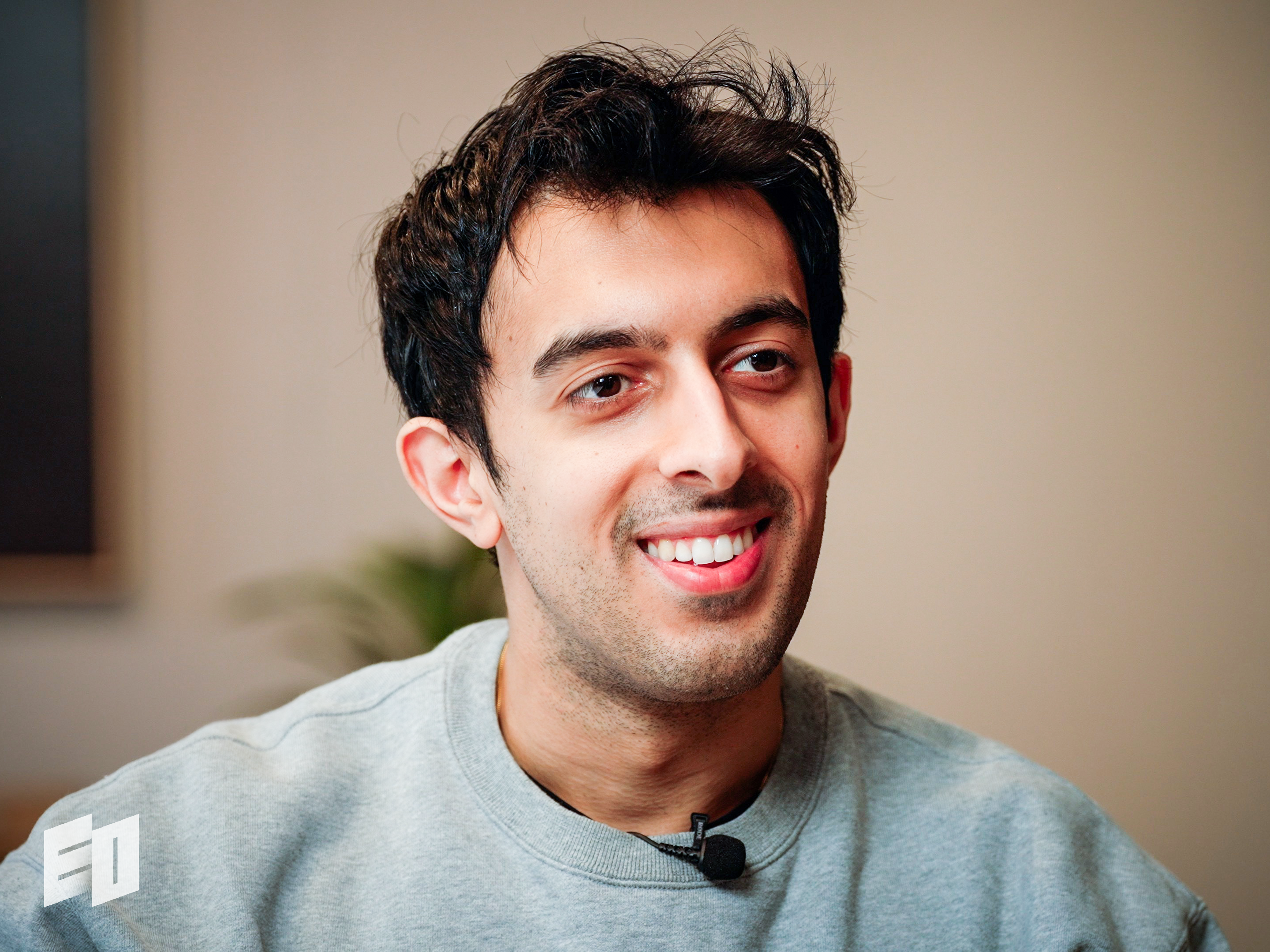
Annanay Kapila: I think there's a lot of cognitive dissonance amongst quants and traders. They've kind of convinced themselves, because they're earning big fat paychecks, that they're doing something good for the world. But no one in quant trading wakes up in the morning and thinks, "How do I make the markets more efficient today? How do I lower costs for consumers?" People in trading just want to make money so they can earn big bonuses.
Tower has really high quality talent. A lot of my colleagues were international math Olympiad medal winners, people ranked in the top 50 in India when they did the IIT entrance exam. They're stuck in the same golden handcuffs. They're getting paid too much and they don't want to leave. Quant finance has sequestered a lot of very talented people in an industry that basically adds no value to the world. That was really the source of the guilt. I felt that I was wasting my life.
Almost nobody I spoke to said they would still be in the job in 5 years time. A lot of them were like, "2, 3 years and I'll go do something else." And they're still there. Are they still there because they want to be, or because they failed to re-evaluate?
Tower has really high quality talent. A lot of my colleagues were international math Olympiad medal winners, people ranked in the top 50 in India when they did the IIT entrance exam. They're stuck in the same golden handcuffs. They're getting paid too much and they don't want to leave. Quant finance has sequestered a lot of very talented people in an industry that basically adds no value to the world. That was really the source of the guilt. I felt that I was wasting my life.
Almost nobody I spoke to said they would still be in the job in 5 years time. A lot of them were like, "2, 3 years and I'll go do something else." And they're still there. Are they still there because they want to be, or because they failed to re-evaluate?
Chapter 2: But You Need Money to Chase What Matters
What finally pushed you to leave and start something new?
Annanay Kapila: Towards the end of my time at Tower, a bunch of things happened in life that aligned and made me think maybe I should leave and build a startup. I had a burning desire to improve the markets because I'd worked on the other side as a quant in high frequency trading. I thought, if the aim really is to make markets more efficient, why don't you just improve the nature of the market design so that high frequency trading firms don't extract all this money from investors and the market just becomes fairer?
Towards the end of 2024, early 2025, I pitched this idea to my co-founder, one of my best friends. We've known each other since we were about 18. Josh worked at Citadel on the engineering side. He called me and said, "Hey, I have this crazy idea." I was like, this is so obviously a better market design that there's no way it doesn't exist in 5 or 10 years time. Either the incumbents get their act together, or we do it.
I had a lot of money saved up so I wouldn't be under financial pressure. Once that side of the equation was solved, I thought, okay, it's time to do something I want to make my life's work. I left my job in February 2025.
Towards the end of 2024, early 2025, I pitched this idea to my co-founder, one of my best friends. We've known each other since we were about 18. Josh worked at Citadel on the engineering side. He called me and said, "Hey, I have this crazy idea." I was like, this is so obviously a better market design that there's no way it doesn't exist in 5 or 10 years time. Either the incumbents get their act together, or we do it.
I had a lot of money saved up so I wouldn't be under financial pressure. Once that side of the equation was solved, I thought, okay, it's time to do something I want to make my life's work. I left my job in February 2025.
Chapter 3: Build Something Worth Telling Your Grandkids
How did Y Combinator come into the picture?
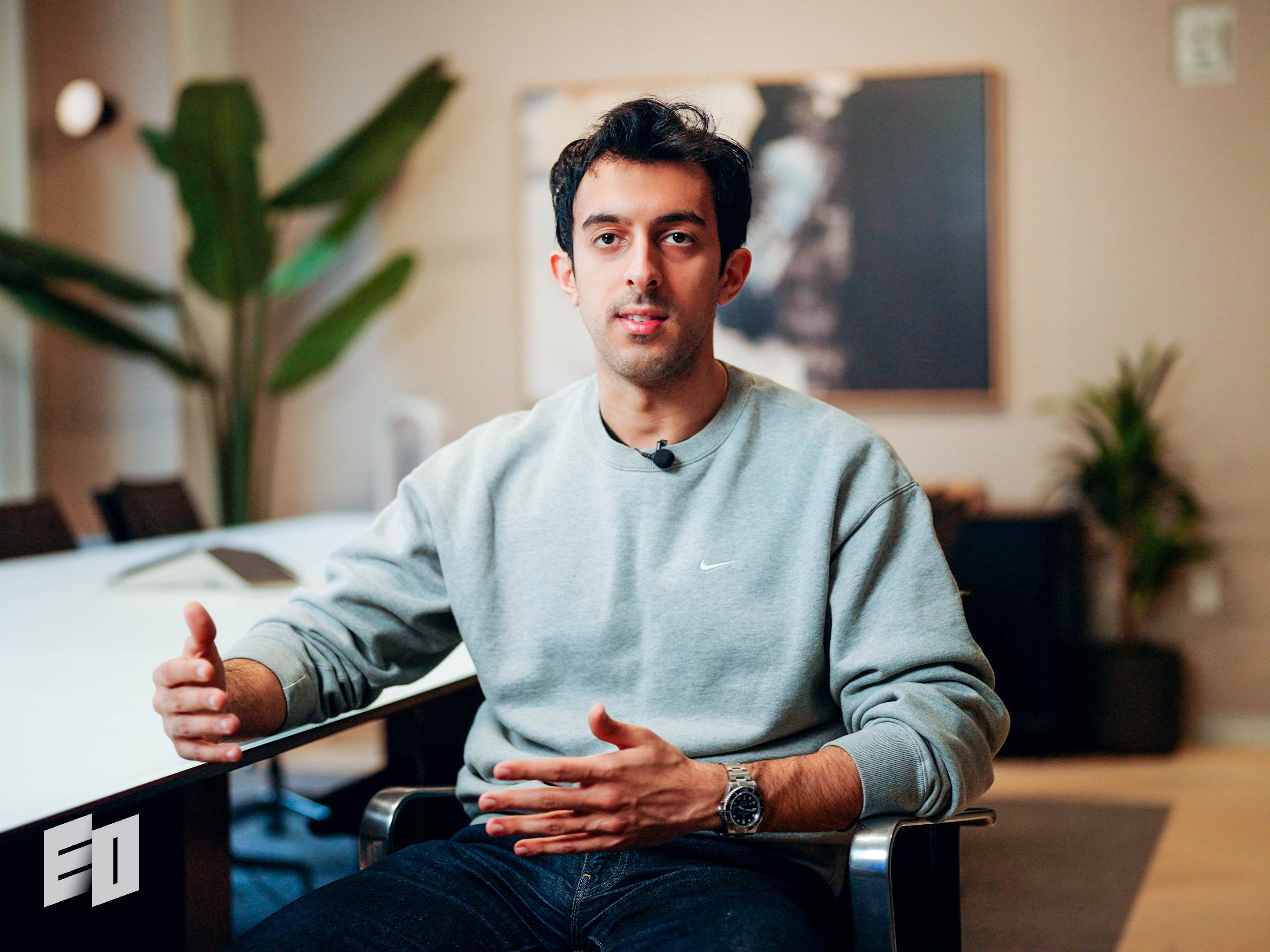
Annanay Kapila: We applied for funding from Y Combinator. Josh calls me while I'm in Austria watching an opera show. He says, "We got an interview. We have to come." I flew back to London the same day.
They ask questions that really test whether you've gotten into the details of the problem and understand the why now moment, like why is now the right time to build this idea. PG explains it this way: they don't think about what's the probability of this idea succeeding. They just want to know the probability is bigger than zero. Even if it's 1%, but it's a huge idea and you're a good team, they'll fund you.
I'm aware that what we're doing right now is either going to make us like $50 million or zero, because an exchange is not a $10 million business. It's either zero or huge. And they asked, "Is this a huge idea, and are these the right people to do it?" The next day we got the offer.
They ask questions that really test whether you've gotten into the details of the problem and understand the why now moment, like why is now the right time to build this idea. PG explains it this way: they don't think about what's the probability of this idea succeeding. They just want to know the probability is bigger than zero. Even if it's 1%, but it's a huge idea and you're a good team, they'll fund you.
I'm aware that what we're doing right now is either going to make us like $50 million or zero, because an exchange is not a $10 million business. It's either zero or huge. And they asked, "Is this a huge idea, and are these the right people to do it?" The next day we got the offer.
The Exchange Launch That Almost Broke Us
What was the hardest moment during YC?
Annanay Kapila: Building in fintech is always tough because you can't launch something and say sorry if it breaks. That's a real breach of trust. The hardest day was during YC. We'd launched the exchange internally just to YC. We were kind of forced by our partners to launch early. They said, "You need to do this otherwise you'll never get user feedback. Just do it right now."
I wake up at 3:00 a.m., very jet lagged. My co-founder is there and he says, "The exchange has blown up." We looked at everyone's results and somebody was plus $1 million, somebody was minus $1 million. We only gave them $100 to play with. How has this happened?
We spent all day reconstructing what had happened, figuring out how much everyone owed and how much they didn't owe, reimbursing people. That was the first time we took a loss as a company. Luckily it was still small scale. But the issue was it really hit home how difficult it is to build a 24/7 perfect fully available system. Anything can go wrong at any time. Lightning bolt, fire in the data center, whatever. We didn't sleep properly for days after that. If that happens at scale, it's game over for us in exchange.
I think the reason the partners made us do it was to make us grow up and realize the gravity of the situation. That was a really tough time. Both the best days of our life and the worst days of our life. Working 100 hours a week, very focused, very frenetic.
I wake up at 3:00 a.m., very jet lagged. My co-founder is there and he says, "The exchange has blown up." We looked at everyone's results and somebody was plus $1 million, somebody was minus $1 million. We only gave them $100 to play with. How has this happened?
We spent all day reconstructing what had happened, figuring out how much everyone owed and how much they didn't owe, reimbursing people. That was the first time we took a loss as a company. Luckily it was still small scale. But the issue was it really hit home how difficult it is to build a 24/7 perfect fully available system. Anything can go wrong at any time. Lightning bolt, fire in the data center, whatever. We didn't sleep properly for days after that. If that happens at scale, it's game over for us in exchange.
I think the reason the partners made us do it was to make us grow up and realize the gravity of the situation. That was a really tough time. Both the best days of our life and the worst days of our life. Working 100 hours a week, very focused, very frenetic.
Raising at a $95M Pre-Revenue Valuation
How did fundraising work, and how did you get to a $95 million valuation with no revenue?
Annanay Kapila: There are some misconceptions about how fundraising happens in Silicon Valley. It's very quick. If the check size is less than $500K, typically it's a 30-minute meeting and you get the decision on the call or just after. For bigger checks we had a first meeting and then a second in-person meeting, both roughly 30 minutes.
Day one we had a bunch of angels, got some money, and then stopped taking angel money. Then it was about the bigger funds. We had two major funds, General Catalyst and Next Venture Partners, at a $95 million valuation. We were pre-revenue. The only point in raising venture money is if you can be massive. If you're at that huge scale, a VC will find it very hard to say no.
Day one we had a bunch of angels, got some money, and then stopped taking angel money. Then it was about the bigger funds. We had two major funds, General Catalyst and Next Venture Partners, at a $95 million valuation. We were pre-revenue. The only point in raising venture money is if you can be massive. If you're at that huge scale, a VC will find it very hard to say no.
Silicon Valley vs London: A Different Money Mindset
You spent time in San Francisco. How did that change your thinking?
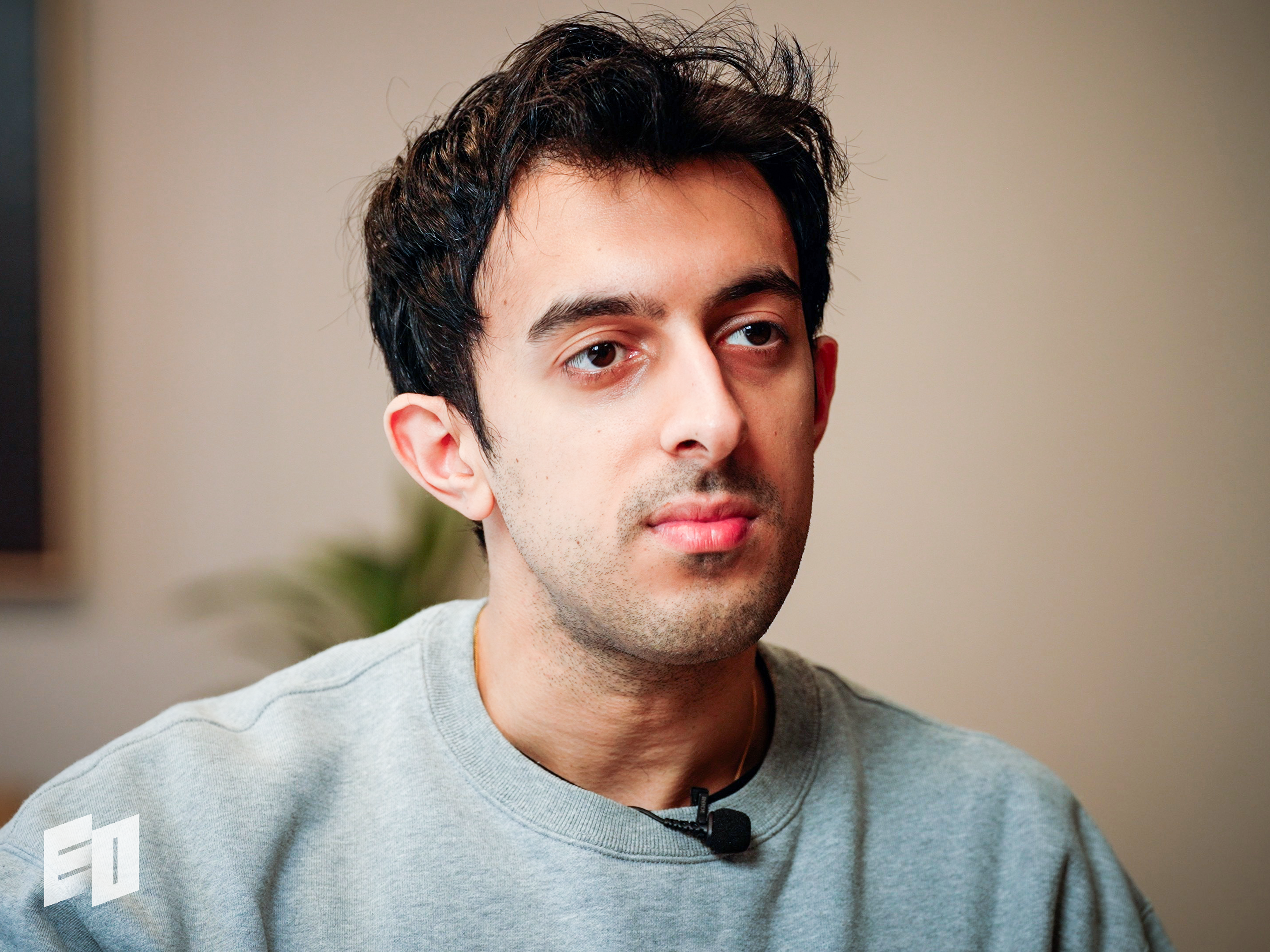
Annanay Kapila: In London and New York, people are very concerned with how much money someone has, how much they make, how much is in their bank account, how much they're going to make in the future. Everything's about money. San Francisco, people really don't talk about that as much. They're much more concerned with impact. It was really useful to live there for about 4 months.
The Silicon Valley approach is like, let's try and make something that's going to make a billion dollars in 5 years time, but don't even think about the money right now. It's not even on the scale. That was a new way of thinking for me. A nice part of being in San Francisco.
The Silicon Valley approach is like, let's try and make something that's going to make a billion dollars in 5 years time, but don't even think about the money right now. It's not even on the scale. That was a new way of thinking for me. A nice part of being in San Francisco.
What's Actually Broken in Traditional Markets
What specifically is broken about how markets work today?
Annanay Kapila: What we want to do is make sure everyone trades on the same equal playing field. If you want to buy Tesla, that trade goes through NASDAQ, then through an interface like Robinhood, then through a clearing house that does risk management and settlement. Three separate companies involved in doing one trade that should really just be done by one company as efficiently as possible. That's what we're offering at QFEX.
Our pricing is completely transparent. We don't make money from profit share agreements. We just make money from fees, and our fees are as low as possible. We actually give a lot of our fees back to users if you refer friends. It's similar to Stripe if you want a direct comparison. Stripe really reduced the frictions when it comes to payments. We're reducing the frictions when it comes to trading.
So much money trades through financial markets in ways people don't even understand, that even small improvements have massive downstream impact.
Our pricing is completely transparent. We don't make money from profit share agreements. We just make money from fees, and our fees are as low as possible. We actually give a lot of our fees back to users if you refer friends. It's similar to Stripe if you want a direct comparison. Stripe really reduced the frictions when it comes to payments. We're reducing the frictions when it comes to trading.
So much money trades through financial markets in ways people don't even understand, that even small improvements have massive downstream impact.
Advice to Young People in High-Paying Jobs
What would you say to young people who are stuck in well-paying jobs but feel like something is missing?
Annanay Kapila: Think carefully about why you're doing it. Honestly ask yourself, is this what you want to be doing in 5 or 7 years time?
The best founders always feel that the company they're working on is their life's work. They want it to be their legacy. It's more than just money. I was ready to reach that stage where I was no longer just thinking about the money. We want to go out there and be the change in the world that we want to see. And here's a very obvious change that I see now that not a lot of other people can work on.
Ask yourself: is this what you want to tell your kids that you spent your life doing? Do you think this job will still be around in 5 or 7 years time? If you're still a young person, you should be optimizing for learning and growth, not for how much money you're making right now.
The best founders always feel that the company they're working on is their life's work. They want it to be their legacy. It's more than just money. I was ready to reach that stage where I was no longer just thinking about the money. We want to go out there and be the change in the world that we want to see. And here's a very obvious change that I see now that not a lot of other people can work on.
Ask yourself: is this what you want to tell your kids that you spent your life doing? Do you think this job will still be around in 5 or 7 years time? If you're still a young person, you should be optimizing for learning and growth, not for how much money you're making right now.
Explore more