
Mar 27, 2026
35 Million Users. $100M ARR. And He’s Just Getting Started.
An Interview with Sam Liang, Co-Founder and CEO of Otter AI
Founder Focused
From a Crazy Idea to $100M ARR: The Otter.ai Story
We never heard Shakespeare's voice. We never heard Darwin's. Thousands of years of human conversation is gone forever. Sam Liang couldn't stop thinking about that. So he built something to make sure it never happens again. As the co-founder and CEO of Otter.ai, a platform with over 35 million users and $100 million in ARR, he’s spent years tackling a problem most people overlook: how much human knowledge gets lost in conversation.
In this interview, he reveals why he refused to use third-party APIs, how he built deep technology with less resources than Google or Microsoft, and why he believes 99% of the world still hasn't adopted voice AI, which makes the opportunity ahead enormous.
Watch the full interview now on our YouTube channel! Below is the complete transcription of the interview. Minor edits have been made for clarity and readability.
Key Highlights:
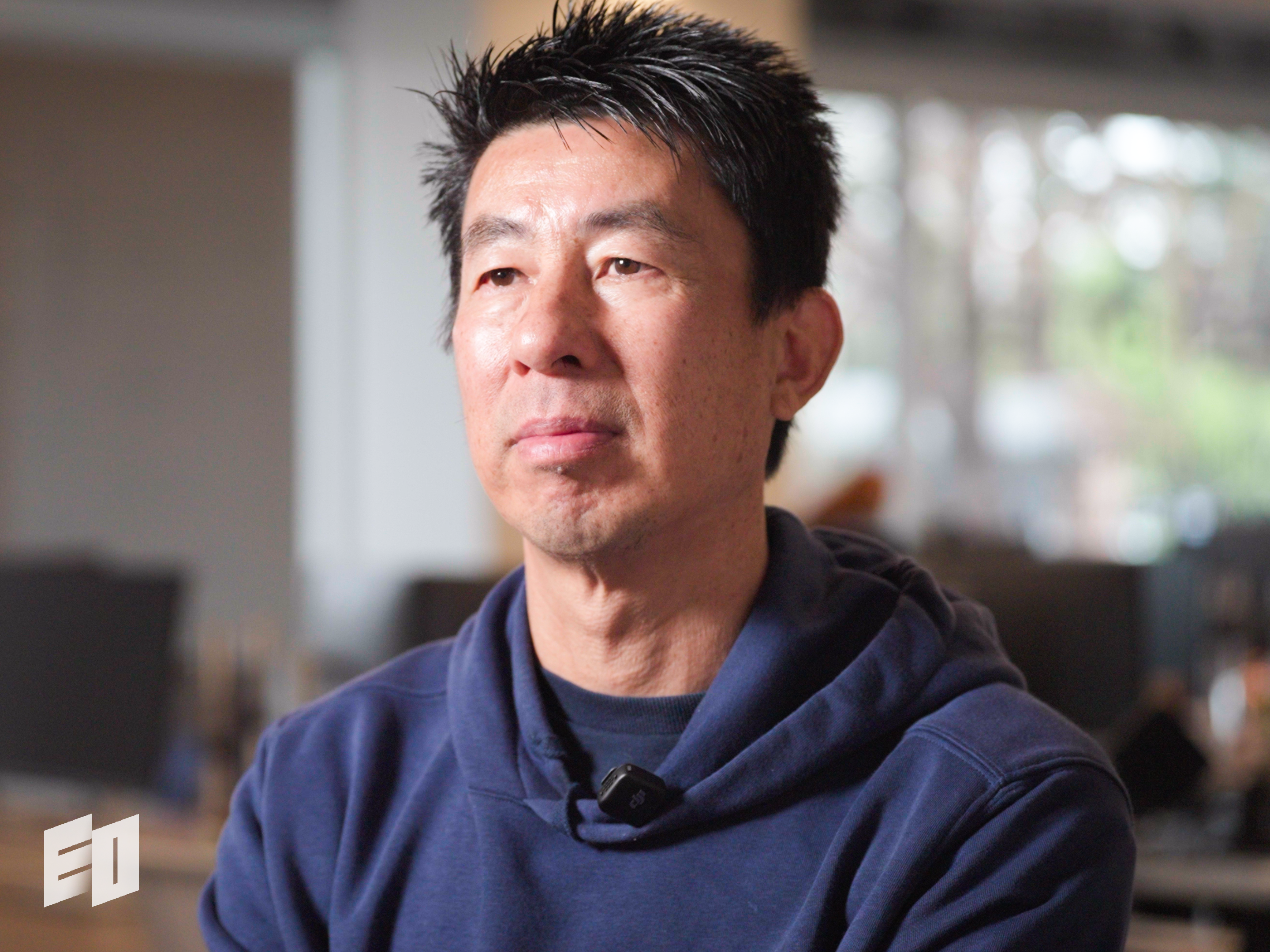
"Although human beings have been talking with each other for hundreds, thousands of years, most of the voice knowledge in history has been lost. We never heard from Shakespeare. We never heard from Charles Darwin. That's a tremendous loss of human knowledge and human intelligence."
"We started as a transcription tool, then evolved into an AI meeting assistant, and now we're building a meeting-centric enterprise knowledge base with agentic workflows on top of it. So far we have over 35 million users. We exceeded $100 million in ARR."
"If you use a third-party API, you have to pay them a lot of money, which limits how much free service you can provide. If it's too easy for you to build, it's very easy for 100 other people to build as well."
"We think voice will become the primary interface for enterprise intelligence. In a few years, people will rarely use a keyboard to write anything; they will just talk, and our AI will write everything for you."
"At least 95–99% of the world hasn't adopted a tool like Otter yet. We have to look at the next 10 years, not just today. That's how generational companies are built."
The Frustration That Built a $100M Company
What is your view on students using AI tools like Otter in education?
Sam Liang: I was at Harvard University just two days ago and a lot of professors actually don't allow students to use a tool like Otter to help them learn. I think that's old thinking. The way we do education, the system was created at least 100 years ago. They have to allow the students to use whatever AI tools.
Why do you believe voice AI will be huge?
Sam Liang: Although human beings have been talking with each other for hundreds, thousands of years, most of the voice knowledge in history has been lost. We never heard from Shakespeare. We never heard from Charles Darwin. That's a tremendous loss of human knowledge and human intelligence. With that frustration and insight, we thought that voice AI will be really huge in the future.
Can you introduce yourself and what your company does?
Sam Liang: I'm Sam, co-founder and CEO of Otter AI. We started as a transcription tool, then evolved into an AI meeting assistant, and now we're building a meeting-centric enterprise knowledge base with agentic workflows on top of it. So far we have over 35 million users. We exceeded $100 million in ARR. Now enterprises are adopting it to manage their huge meeting content.
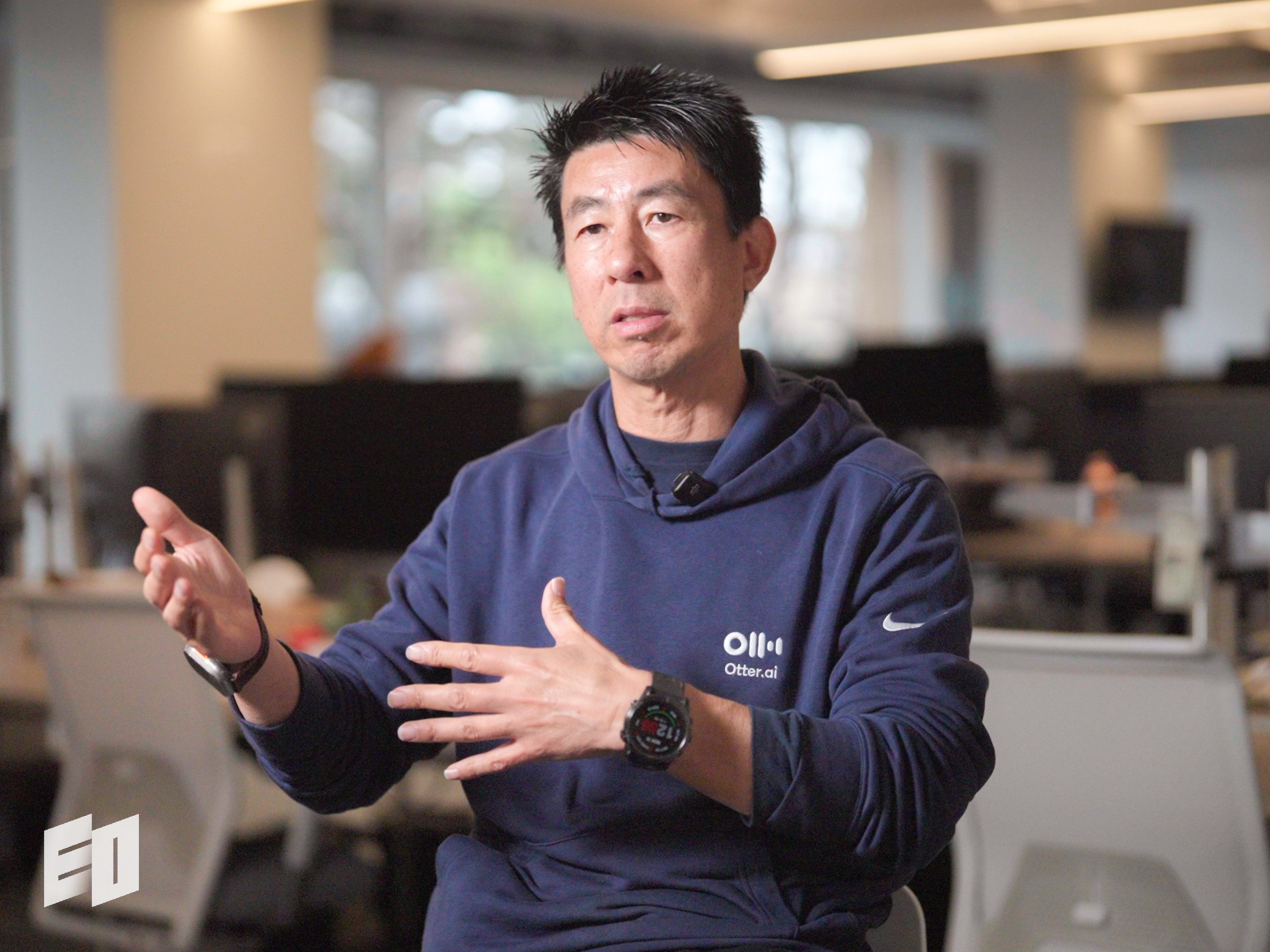
The Bet Nobody Believed In
What is your background before starting Otter AI?
Sam Liang: I did my PhD at Stanford University under advisor David Cheriton, who had the vision to recognize talent; he wrote a $100,000 check to Larry Page and Sergey Brin before they had anything. I then worked at Google from 2006 to 2010 as the lead of the Google Maps location platform. In 2010, I quit Google to start a mobile startup in Palo Alto. We were the first to build a location tracking system and do persistent sensing on mobile devices to understand user mobile behaviors so we could personalize mobile services for them. That company was successfully acquired. Then in 2016, I started thinking about something new and bigger.
What problem led you to start Otter AI?
Sam Liang: While building my first startup, I had a lot of meetings with investors, internal team members, and customers. It was really hard for me to remember all the meeting content, and also hard to share that knowledge with all the team members. I thought there must be a better way to address that.
What was the big insight behind the company back in 2016 and how did people react?
Sam Liang: Back in 2016, we said we were going to record everything and enable it to be shared with other team members. Both ideas made most people uncomfortable. Being recorded is uncomfortable, and sharing meeting notes was uncommon because traditionally people took notes in personal paper notebooks. We anticipated that the mindset and culture would change, so we built a product to enable that change.
How do you think about product adoption for something people aren't used to?
Sam Liang: You can convince some people, but you cannot convince everyone, and that's okay. Any new product follows a certain adoption curve. People who adopt early get value and benefit sooner; they become more effective and productive, and they can show that value to their colleagues and help convince other users. You have to pick something that most people haven't been convinced of yet.
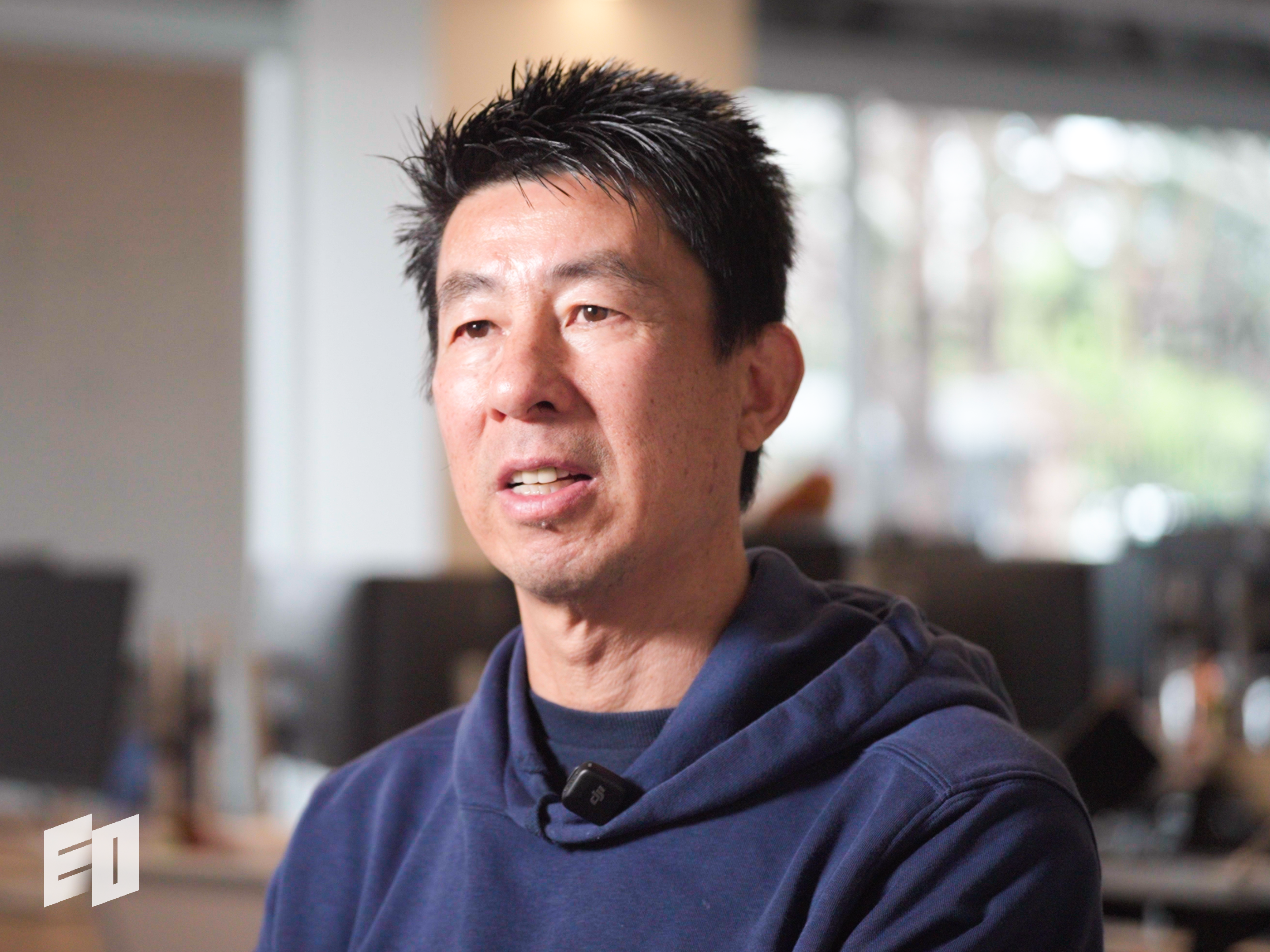
Why He Refused to Use Third-Party APIs
Why did you decide to build your own speech recognition technology instead of using third-party APIs?
Sam Liang: If you want to really go big, you need deep technology roots. Today there are a lot of APIs you can use to quickly build a meeting note taker. Any college student could do that. Back in 2016, if we had waited for someone else to create the API, we would have been many years late. We knew there were a lot of risks and that we had far fewer resources, money, and people than Google or Microsoft. But our choice was to build deep technologies that could enable us to create a new revolution. By owning our own technology, we can keep costs low. If you use a third-party API, you have to pay them a lot of money, which limits how much free service you can provide.
What deep technical problems is Otter still working on?
Sam Liang: With hundreds of millions of voice data points, we are working on how to truly model human conversation, specifically how to model the interactions of multiple speakers talking to each other in a meeting. That is still an unsolved problem. To solve it, you cannot just rely on third-party APIs. You have to build your own deep AI stack. And if it's too easy for you to build, it's very easy for 100 other people to build as well.
The Next Interface Isn't a Screen
What is your vision for the future of how people interact with technology?
Sam Liang: Behavior always changes when you have new technologies. Before the internet became common, it felt like we'd always had email. But then Slack became popular and people sent fewer emails. Now, with voice technology becoming much more mature, we think voice will become the primary interface for enterprise intelligence. In a few years, people will rarely use a keyboard to write anything; they will just talk, and AI will write everything for them. This is already starting to happen, with many people using AI to write documents, emails, and LinkedIn posts. It will only accelerate.
How do you think about the long-term opportunity for Otter AI?
Sam Liang: At least 95–99% of the world hasn't adopted a tool like Otter yet. We have to look at the next 10 years, not just today. That's how generational companies are built.
What keeps you going through the challenges of building a startup?
Sam Liang: People say building a startup is like running a marathon, but building a startup is way harder than running a marathon. I've run 11 marathons and I'm going to run another one in 2 months. That definitely helps me stay healthy, handle stress, and push through all the challenges. Most people give up pretty fast. If you're building something challenging, the difficulties are expected; you have to persist and continue pursuing your goal.
Explore more