
Jan 09, 2025
From Closet Rejection to Deloitte Top 100: How Mosaic's Founder Built Unstoppable Grit
An interview with Bijan Moallemi, Founder of Mosaic
Founder Focused
From his master bedroom closet, Bijan Moallemi fielded the call that would change everything. Seven people crammed into his makeshift office, an investor on the line, and the crushing weight of a "no" that felt like a knockout punch.
But here's the thing about this former Palantir finance executive turned founder: he doesn't just bounce back from rejection—he transforms it into rocket fuel. Today, his company Mosaic has landed at #97 on the Deloitte Fast 500, proving that sometimes the most painful "no" becomes the catalyst for unstoppable growth.
In this candid conversation, Moallemi reveals the tennis court mindset that helped him survive 50+ rejections, the dictionary-flipping process behind naming his company, and why he believes failure isn't about making mistakes—it's about refusing to learn from them.
Watch the full interview now on EO's YouTube channel! Below is the complete transcription of the interview. Minor edits have been made for clarity and readability.
Key Highlights:
"If I'm playing a match and I lose a point, I can't worry about the point that I lost, because if I'm still thinking about the point that I lost, I'm gonna lose the next point in the next game and I'm gonna lose the match. The same is true in a startup."
"We had like 7 or 8 people in, so I'm in my master bedroom closet getting a call from an investor hoping for a yes, and we got a no. That was super painful. We weren't ready for that, but it motivated us to be better, move faster, and things."
"I don't see no as a failure if I'm doing the same thing over and over and not learning, that's failure, but if there's mistakes along the way and I'm learning from that, I actually see that as a positive thing."
"We debuted as number 97 on the Deloitte Fast 500, and so that's for the fastest 500 growing tech companies from a revenue perspective. Pretty happy to be top 100 on that list."
"We had like 7 or 8 people in, so I'm in my master bedroom closet getting a call from an investor hoping for a yes, and we got a no. That was super painful. We weren't ready for that, but it motivated us to be better, move faster, and things."
"I don't see no as a failure if I'm doing the same thing over and over and not learning, that's failure, but if there's mistakes along the way and I'm learning from that, I actually see that as a positive thing."
"We debuted as number 97 on the Deloitte Fast 500, and so that's for the fastest 500 growing tech companies from a revenue perspective. Pretty happy to be top 100 on that list."
The Making of a Fighter
Tell us about your background and what shaped your work ethic.
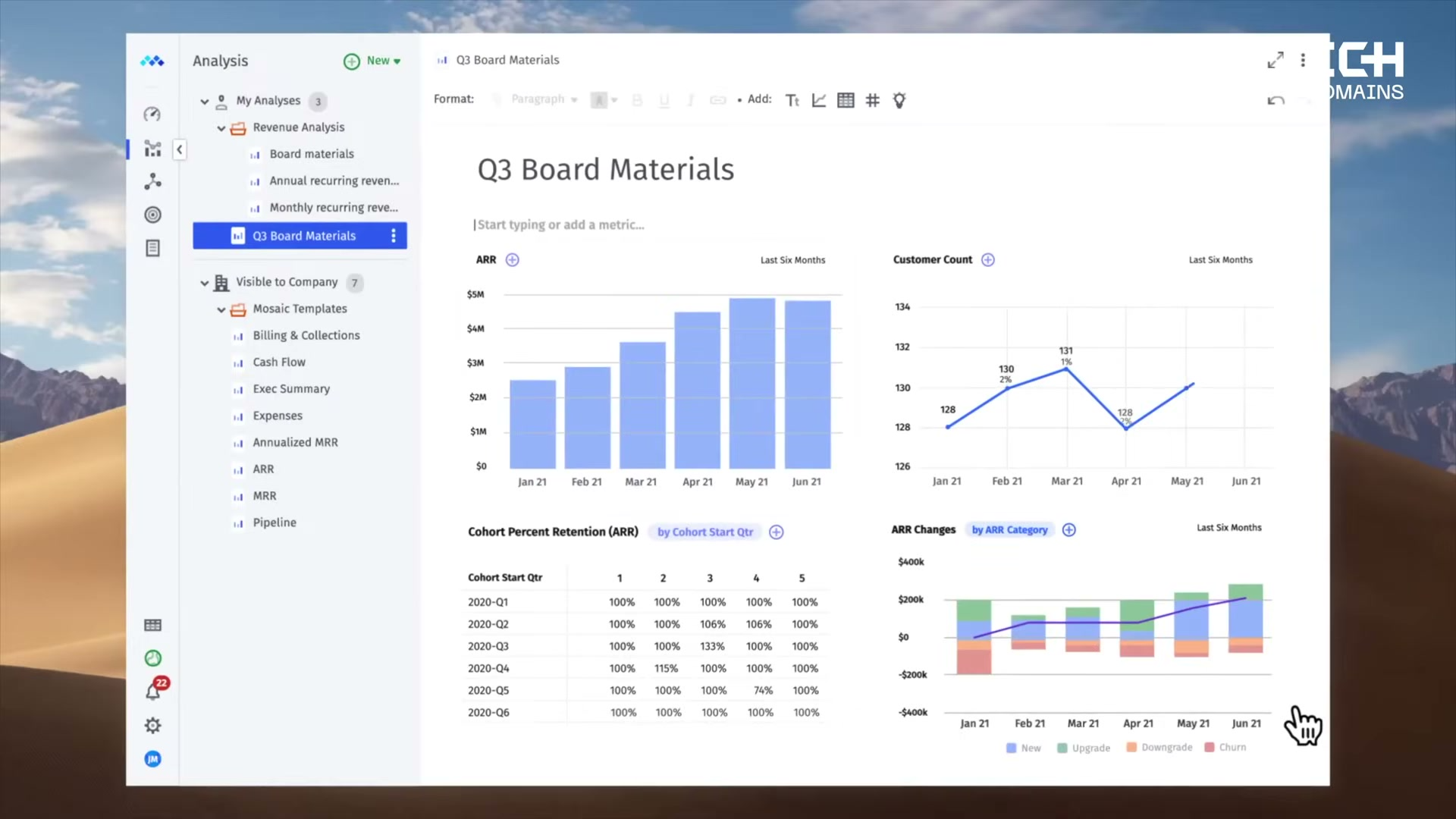
Bijan Moallemi: I'm Bijan Moallemi. Mosaic.tech is a strategic finance platform. We hook into data sources across the business and automate a lot of the manual work that finance teams would be traditionally doing. We debuted as number 97 on the Deloitte Fast 500, and so that's for the fastest 500 growing tech companies from a revenue perspective. Pretty happy to be top 100 on that list, and I think it's just a testament to all the team's hard work over the last few years to hit those numbers.
My dad moved to the United States when he was 18 to escape the revolution in Iran, working 3 jobs to pay for college, was sending money back to his family, ended up getting 2 degrees in 3 years. And so I think that work ethic, that tenacity was something that he had, something that my mom had, and was just kind of the way that I was raised.
My dad moved to the United States when he was 18 to escape the revolution in Iran, working 3 jobs to pay for college, was sending money back to his family, ended up getting 2 degrees in 3 years. And so I think that work ethic, that tenacity was something that he had, something that my mom had, and was just kind of the way that I was raised.
How did you first discover this tenacity in yourself?
Bijan Moallemi: For me, I think the first time that I really started to see that in myself was on the tennis court, played competitive tennis growing up. For me, I was never the most talented person, never the most athletic on the court, but I felt like if I was training harder than everyone, that would put me in a position to where I would have a chance to win any match.
Before I'd get ready for tennis tournaments, they'd always have these national tournaments over the summer and they would be in the hottest places. So San Antonio in August, which is 100 degrees, 100% humidity. Or maybe it's Fort Lauderdale, Florida, and the weather here doesn't really get you prepared for that. What that would mean for me is going out to Palm Springs, training in sweatpants and a hoodie in 100 degree weather for a week, getting ready for those tournaments, and that's definitely the attitude that I've kind of taken with me throughout my entire life. I think that's the attitude that you can't really lose because you're always getting better and in the long run, we feel like that'll help us win.
Before I'd get ready for tennis tournaments, they'd always have these national tournaments over the summer and they would be in the hottest places. So San Antonio in August, which is 100 degrees, 100% humidity. Or maybe it's Fort Lauderdale, Florida, and the weather here doesn't really get you prepared for that. What that would mean for me is going out to Palm Springs, training in sweatpants and a hoodie in 100 degree weather for a week, getting ready for those tournaments, and that's definitely the attitude that I've kind of taken with me throughout my entire life. I think that's the attitude that you can't really lose because you're always getting better and in the long run, we feel like that'll help us win.
The Palantir Foundation
What was your experience at Palantir and how did it shape your entrepreneurial vision?
Bijan Moallemi: Palantir is an amazing company. The company was just over 100 people when I joined. The finance function wasn't really built out yet, and so we went on this incredible journey for 7 years, building and scaling the finance team, doing close to $3.25 billion in revenue by the time we left.
When you've got a rocket ship and you've got a company who doesn't have their finances in order, the business was asking these reasonable questions. What's our cash balance? How much revenue do we have? Who owes us money, and early on, because we didn't have the infrastructure, we couldn't answer those questions. Ultimately, we were working really hard. I remember I was living in San Francisco at the time. We were taking the first Caltrain down to Palo Alto in the morning, taking the last Caltrain back up, but because we were doing our work kind of the old fashioned way, which is using Excel to do everything, we were spending so much time pulling data, cleaning data, mapping it, doing the analysis that if the business asked us an important question, it would take us days or weeks to answer it. And with the pace of business these days, if it takes you 2 weeks to answer the question, people have moved on. They need something that is faster. They need something that's real-time or proactive.
When you've got a rocket ship and you've got a company who doesn't have their finances in order, the business was asking these reasonable questions. What's our cash balance? How much revenue do we have? Who owes us money, and early on, because we didn't have the infrastructure, we couldn't answer those questions. Ultimately, we were working really hard. I remember I was living in San Francisco at the time. We were taking the first Caltrain down to Palo Alto in the morning, taking the last Caltrain back up, but because we were doing our work kind of the old fashioned way, which is using Excel to do everything, we were spending so much time pulling data, cleaning data, mapping it, doing the analysis that if the business asked us an important question, it would take us days or weeks to answer it. And with the pace of business these days, if it takes you 2 weeks to answer the question, people have moved on. They need something that is faster. They need something that's real-time or proactive.
How did this experience lead to the idea for Mosaic?
Bijan Moallemi: Palantir was step one. My co-founders and I, we each went on to be CFOs at other high growth VC-backed companies. If you don't have the billion dollars on the balance sheet like Palantir had at the time, you don't have a technical finance team, which most teams don't, you're actually in a big disadvantage, and the problem that we were solving at Palantir, it's mission critical. Every company needs to understand their finances. We realize that, hey, everything we did at Palantir. This is actually something that's needed and it's ubiquitous for all companies. It's not just a Palantir specific problem.
Dictionary Pages and Mosaic Dreams
How did you come up with the name Mosaic?
Bijan Moallemi: As we were just getting the company built, we spent a really long time thinking about the name. We bought a dictionary and so my co-founder and I, we probably spend 2-3 hours a day just paging through the dictionary. We landed on mosaic. The name itself, if you think about a mosaic tile, one tile on its own could be one system of data, and that's valuable, but it's only so valuable. But when you zoom out and you've got 1000 tiles representing all the data across the business, you can actually paint beautiful mosaic, this beautiful vision about the company.
We're a small startup, we hadn't raised any money at the time. There's other mosaics out there. It's a somewhat common name, and we landed on .tech because we're a technology company first and foremost, and Mosaic is really all about pulling in data from various systems across the business, using that data to plan, forecast, analyze, do all the most strategic, important work that a finance team is responsible for.
We're a small startup, we hadn't raised any money at the time. There's other mosaics out there. It's a somewhat common name, and we landed on .tech because we're a technology company first and foremost, and Mosaic is really all about pulling in data from various systems across the business, using that data to plan, forecast, analyze, do all the most strategic, important work that a finance team is responsible for.
Fifty No's and One Crushing Call
What was it like getting those early rejections, both from customers and investors?
Bijan Moallemi: For myself and one of my co-founders, we're finance people. We're not the most outgoing, that isn't really the most natural thing for us, but it had to be done. And so back to us and the way that we sold and the way that we were probably presenting ourselves, we got a lot of no's, and it's not always fun to get no's when people tell you, no, I'm not interested or they don't really understand what you're selling. It probably took a few months and 50 or 60 no's for us to really start to figure selling out.
The memorable no that we have actually is more on the investing side. So I remember early on there were a handful of investors that we were talking to, and we felt like our pitch was pretty good at the time. We were starting to get a little bit of traction and we got kind of late stage in these processes with these investors and we're in, I think the closet because the room itself that was my office we had like 7 or 8 people in so I'm in my master bedroom closet getting a call from an investor hoping for a yes and we got a no that was super painful. We weren't ready for that, but it motivated us to be better, move faster, build the product faster, build the business faster.
The memorable no that we have actually is more on the investing side. So I remember early on there were a handful of investors that we were talking to, and we felt like our pitch was pretty good at the time. We were starting to get a little bit of traction and we got kind of late stage in these processes with these investors and we're in, I think the closet because the room itself that was my office we had like 7 or 8 people in so I'm in my master bedroom closet getting a call from an investor hoping for a yes and we got a no that was super painful. We weren't ready for that, but it motivated us to be better, move faster, build the product faster, build the business faster.
Did that investor ever come back around?
Bijan Moallemi: And things moved on and so later that year we were raising a Series A and that same investor came back around without us reaching out, actually saying, hey, I've heard about the progress. I'm seeing everything you guys are doing. I'd love to be a part of the round.
So I don't see no as a failure if I'm doing the same thing over and over and not learning, that's failure. But if there's mistakes along the way, if there's something that goes wrong and I'm learning from that, I actually see that as a positive thing. I don't necessarily see that as a failure. Ultimately that's, that's just part of the journey.
So I don't see no as a failure if I'm doing the same thing over and over and not learning, that's failure. But if there's mistakes along the way, if there's something that goes wrong and I'm learning from that, I actually see that as a positive thing. I don't necessarily see that as a failure. Ultimately that's, that's just part of the journey.
The Tennis Court Mindset
How do you apply your tennis mentality to entrepreneurship?
Bijan Moallemi: In a tennis match, if I'm playing a match and I lose a point, I can't worry about the point that I lost, because if I'm still thinking about the point that I lost, I'm going to lose the next point in the next game and I'm going to lose the match. So you need to have this attitude where you analyze it, OK, what can I do better? But then as you're starting the next point, you kind of, it's water under the bridge, you move on.
The same is true in a startup for everyone that's involved in a startup, but I think really for founders, you feel it orders of magnitude more. Highs are high, the lows are low, and there's days where you don't want to get out of bed. You don't know what the next step is, but I think it's really all around persistence and giving 110% and doing that day in, day out over a long period of time. If you're thinking about starting a company, are you ready to be persistent? Are you ready to overcome those tough days? Are you ready to do that for many years? And if you are, being a founder is the most amazing thing, but it's not for everyone.
The same is true in a startup for everyone that's involved in a startup, but I think really for founders, you feel it orders of magnitude more. Highs are high, the lows are low, and there's days where you don't want to get out of bed. You don't know what the next step is, but I think it's really all around persistence and giving 110% and doing that day in, day out over a long period of time. If you're thinking about starting a company, are you ready to be persistent? Are you ready to overcome those tough days? Are you ready to do that for many years? And if you are, being a founder is the most amazing thing, but it's not for everyone.
Champion the Customer
How do you approach customer feedback and retention?
Bijan Moallemi: One of our core beliefs across the business, and we have 3 core values, but the first one is champion the customer. The way to improve your retention is really understand what your customers want, what they need, and the more time that you can spend with them, the better off you're gonna be.
Listening to customers, I think 2 things are important. Number 1, you have to make sure that you're listening to the right customer, and the right customer from last year may not be the right customer for today or tomorrow, so that's something that you have to keep in mind. For us, the customer that we were serving early on was kind of the SMB, the small market customer. The things that we were hearing from customers when we had those customers was everything that they cared about in the SMB. Now the last couple of years, the focus for us has been pushing up markets, really trying to wean off of some of those smaller customers and focus more on the mid-market and the upper mid-market.
Listening to customers, I think 2 things are important. Number 1, you have to make sure that you're listening to the right customer, and the right customer from last year may not be the right customer for today or tomorrow, so that's something that you have to keep in mind. For us, the customer that we were serving early on was kind of the SMB, the small market customer. The things that we were hearing from customers when we had those customers was everything that they cared about in the SMB. Now the last couple of years, the focus for us has been pushing up markets, really trying to wean off of some of those smaller customers and focus more on the mid-market and the upper mid-market.
How do you balance individual customer requests with your broader roadmap?
Bijan Moallemi: We do still have customers that are in that SMB space, will sometimes sell to them, but the feedback that we hear from customers at this point, we're going to listen more to the mid-market customer than we are to the SMB customer and that's just because of the business that we want to build and where we're trying to go and I think second is it's really easy to fall into the trap when you have a large customer to bend the roadmap and do exactly what a big customer wants you to do, and you have to be making sure that you're listening to the broader customer base and not focusing on what one individual customer might be saying.
I think our approach, I'm really proud of this, is we've spun up this team, we call it the rapid response team where it's a handful of engineers. It's a smaller team, but it allows us to take the requests that we're hearing from customers, and if they're smaller or medium type features, we'll try to weave those things into the roadmap. It's a nice way to get quick wins for customers, make them feel like their voice is heard without actually bending and changing the bigger roadmap that most of the team's working on. I think customers value it, but at the same time, it's allowed us to stay very focused. I think focus is probably the most important thing as a startup. It's less around what are you building, it's actually more around what are you not building.
I think our approach, I'm really proud of this, is we've spun up this team, we call it the rapid response team where it's a handful of engineers. It's a smaller team, but it allows us to take the requests that we're hearing from customers, and if they're smaller or medium type features, we'll try to weave those things into the roadmap. It's a nice way to get quick wins for customers, make them feel like their voice is heard without actually bending and changing the bigger roadmap that most of the team's working on. I think customers value it, but at the same time, it's allowed us to stay very focused. I think focus is probably the most important thing as a startup. It's less around what are you building, it's actually more around what are you not building.
Bringing Innovation to Finance
What's your vision for transforming the finance function?
Bijan Moallemi: I think for us as we started Mosaic, we saw other folks across the business at Palantir, folks in legal, folks in HR, folks in sales, folks in marketing, all other departments, and they'd been blessed with these amazing technologies. These tools made them better at their job. It made their work faster, easier, and on the finance side, for the most part over the last 40 years, things haven't changed. You're still doing your work in spreadsheets in Google Sheets and Excel, it's rows and columns, and the technology hasn't really advanced and so we felt like there was an opportunity to really push forward and bring this technology to the finance persona, a persona that has been needing innovative technology for years now.
So it's something that we're passionate about and I think if we can play a part and make the role of the CFO a little bit easier, I'd be proud of what we're building.
So it's something that we're passionate about and I think if we can play a part and make the role of the CFO a little bit easier, I'd be proud of what we're building.
Explore more