
Seven co-founders. Equal shares. Equal power. No clear leader. What could go wrong?
Snow Lee thought he had cracked the code to startup culture when he launched his first company in 2011 with six other co-founders, all claiming CEO status. The Korean entrepreneur had built what seemed like the perfect egalitarian workplace—until it came time to pivot. Days turned into weeks of endless arguments. Decisions became impossible. The very culture he'd fought to preserve was killing his company.
Now a three-time founder whose previous startups were acquired by Kakao and Buzzvill (valued at $200M), Snow has learned the hard way that being a founder and being a leader require fundamentally different approaches—and knowing when to switch between them can make or break your company. In this candid conversation, he shares the frameworks, failures, and mindset shifts that transformed him from a confused first-time founder into a seasoned entrepreneur whose latest venture, Runbear, gained 1,200 customers in just three months.
Watch the full interview now on EO's YouTube channel! Below is the complete transcription of the interview. Minor edits have been made for clarity and readability.
Key Highlights:
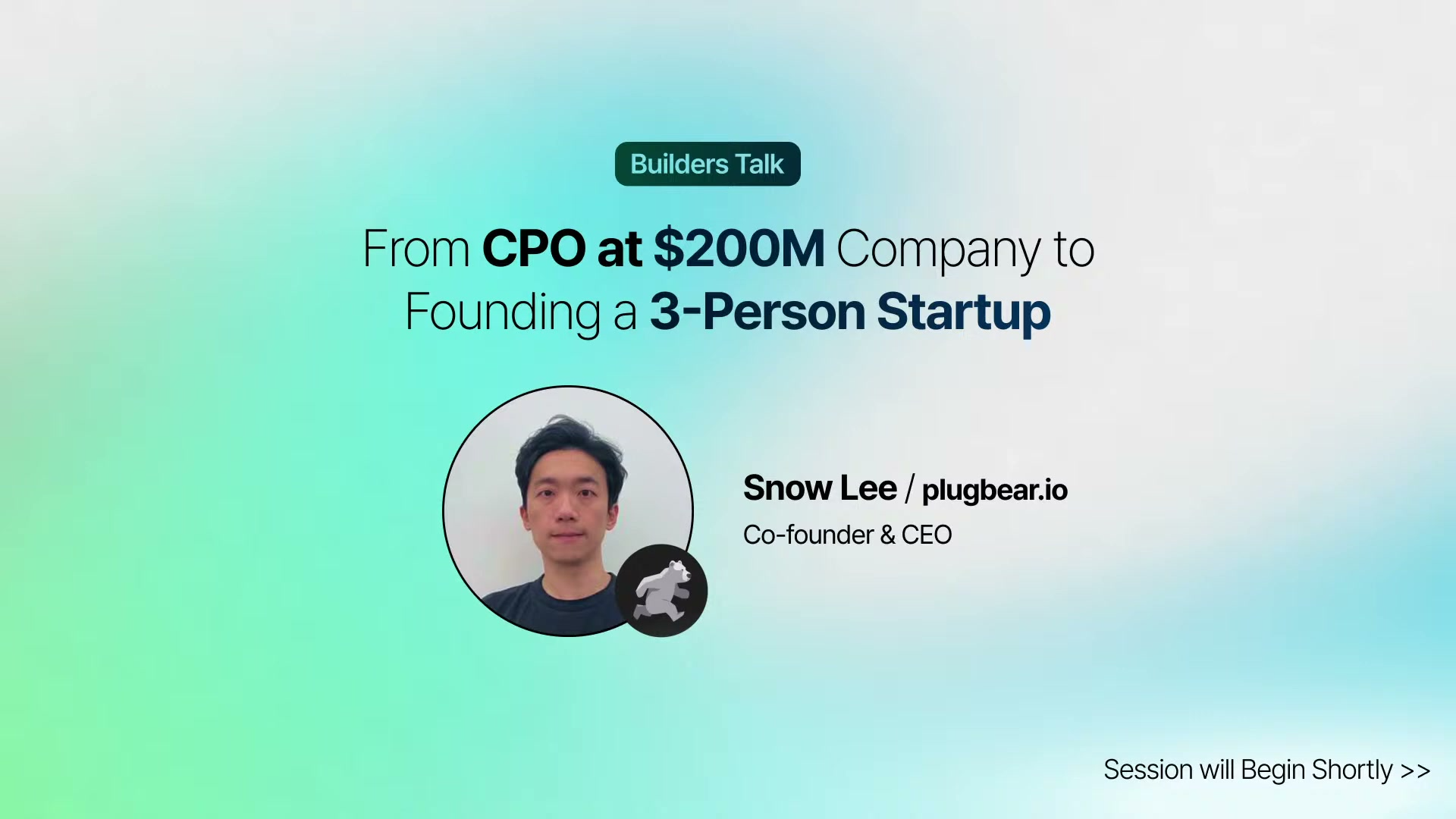
"My first startup in 2011 had 7 co-founders, including myself. We all committed to equal shares and responsibilities, which initially propelled us forward quickly. Everyone was CEO."
"We had many good founders, but no good leaders. The lack of clear role definitions eventually hindered our growth, leading to prolonged discussions and indecision."
"Leadership is defined as an activity. Activities can always be learned and improved."
"Run Bear is my 3rd startup, but it feels like my 1st because it is mission-driven, unlike my previous opportunity-driven startups."
"OpenAI Dev Day opened new opportunities for us. We spent 1 or 2 weeks to launch Plugbear, and just after launching the product, we got traction and we are now in the middle of growth."
"Most founders choose to be poor leaders of a successful business rather than good leaders of a failed one."
"We had many good founders, but no good leaders. The lack of clear role definitions eventually hindered our growth, leading to prolonged discussions and indecision."
"Leadership is defined as an activity. Activities can always be learned and improved."
"Run Bear is my 3rd startup, but it feels like my 1st because it is mission-driven, unlike my previous opportunity-driven startups."
"OpenAI Dev Day opened new opportunities for us. We spent 1 or 2 weeks to launch Plugbear, and just after launching the product, we got traction and we are now in the middle of growth."
"Most founders choose to be poor leaders of a successful business rather than good leaders of a failed one."
When Everyone is CEO, No One is CEO
You mentioned that your first startup had seven co-founders, all with equal power. How did that structure work in practice, and what were the key lessons from that experience?
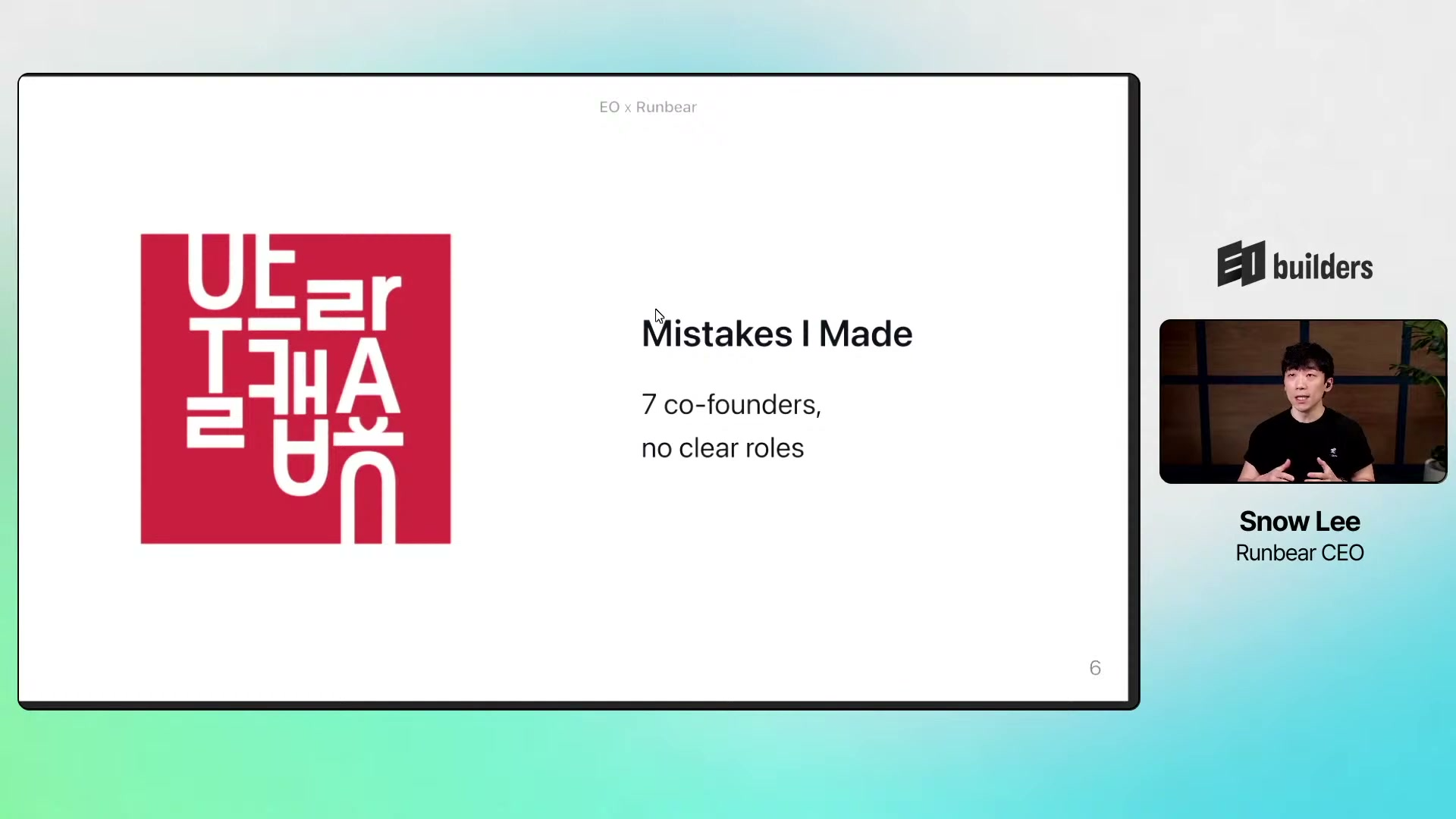
Snow: My first startup in 2011 had 7 co-founders, including myself. We all committed to equal shares and responsibilities, which initially propelled us forward quickly. Everyone was CEO. We worked day and night, every day.
As the team grew, and I formally became the CEO, I believed that it was my mission not to break the existing culture. I consistently communicated to my colleagues that my position as CEO was nominal, rules were meaningless, and that we have all equal powers and responsibilities. I believed, I truly believed that this structure was the best way to motivate all the team members.
However, the lack of clear role definitions eventually hindered our growth, leading to prolonged discussions and indecision. Especially when we needed to pivot, we had to spend days and weeks for endless arguments. At that time, I think we had many good founders, but no good leaders. This led me to contemplate leadership.
As the team grew, and I formally became the CEO, I believed that it was my mission not to break the existing culture. I consistently communicated to my colleagues that my position as CEO was nominal, rules were meaningless, and that we have all equal powers and responsibilities. I believed, I truly believed that this structure was the best way to motivate all the team members.
However, the lack of clear role definitions eventually hindered our growth, leading to prolonged discussions and indecision. Especially when we needed to pivot, we had to spend days and weeks for endless arguments. At that time, I think we had many good founders, but no good leaders. This led me to contemplate leadership.
Learning Leadership Through Coaching
You discovered the power of coaching leadership at Buzzvill. Can you walk us through that transformation and how it changed your approach?
Snow: It's a shame that I didn't truly learn about leadership until after selling my businesses and joining a larger organization. The first significant insight I had about leadership was that leadership can be learned and improved over time.
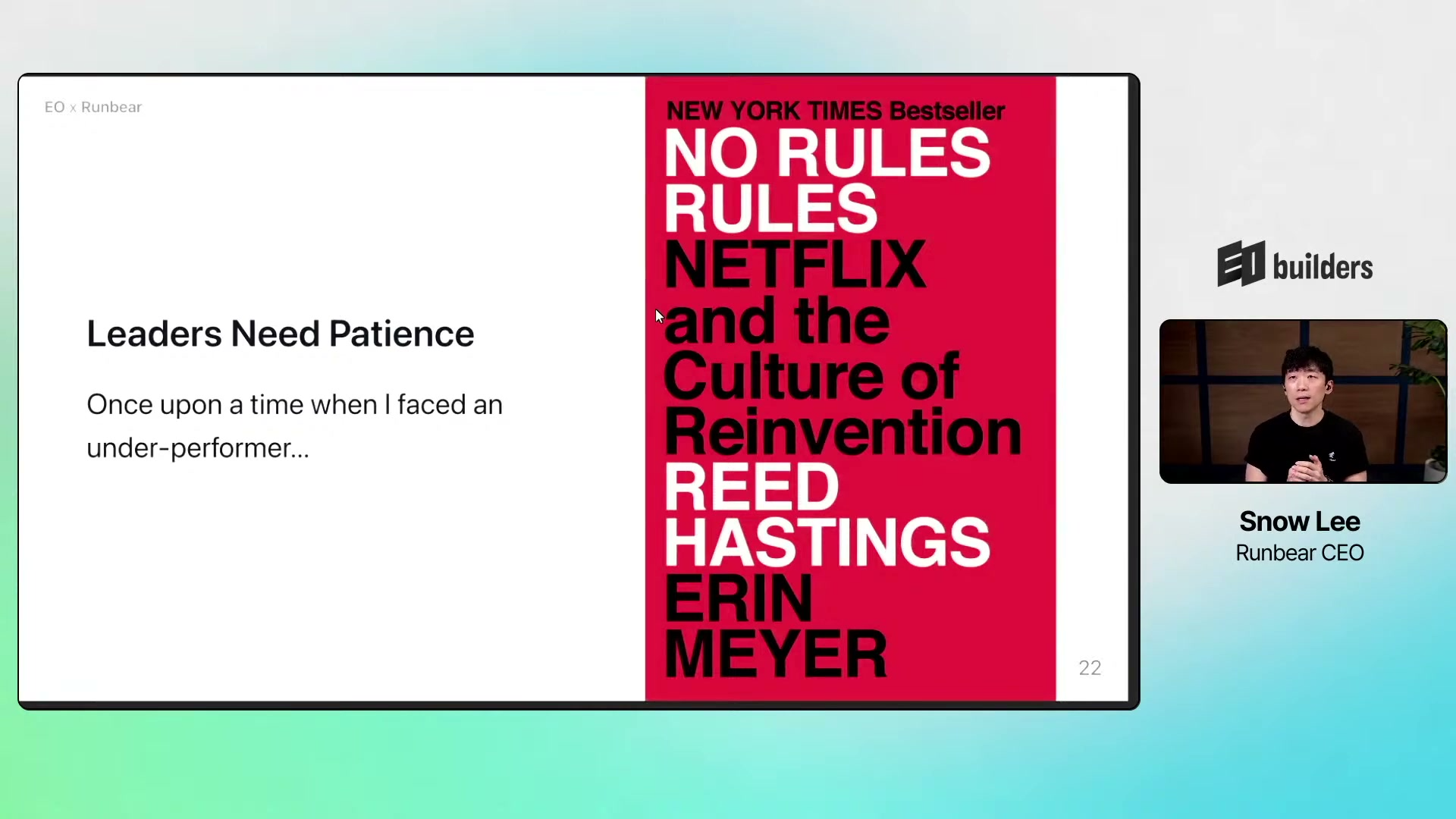
Personally, I'm a fan of coaching leadership style. While leading several team leaders at Buzzvill, one of them asked for my advice. Buzzvill, as an ad tech company, we had several customer cohorts—advertisers, publishers, and end users. She was struggling with defining priorities between the cohorts.
At that time, I was reading the book, Coaching for Performance. Although I had some ideas to suggest, I tried applying coaching techniques, and the result was remarkable. She defined a clearer target customer than I had in mind and gained more insights through customer interviews. It took more time to make outcomes at first, but the long-term output was way, way better.
Without learning this leadership style, I would have stagnated. This approach allowed me to lead up to 7 product teams at Buzzvill simultaneously, contributing to a 3-fold increase in annual revenue.
Personally, I'm a fan of coaching leadership style. While leading several team leaders at Buzzvill, one of them asked for my advice. Buzzvill, as an ad tech company, we had several customer cohorts—advertisers, publishers, and end users. She was struggling with defining priorities between the cohorts.
At that time, I was reading the book, Coaching for Performance. Although I had some ideas to suggest, I tried applying coaching techniques, and the result was remarkable. She defined a clearer target customer than I had in mind and gained more insights through customer interviews. It took more time to make outcomes at first, but the long-term output was way, way better.
Without learning this leadership style, I would have stagnated. This approach allowed me to lead up to 7 product teams at Buzzvill simultaneously, contributing to a 3-fold increase in annual revenue.
The OpenAI Dev Day Pivot
You mentioned OpenAI Dev Day as a critical moment for Runbear. How did that event force you to pivot, and how did you handle that challenge?
Snow: Our previous product, actually, it's still live and running. We have customers. The product is Runbear, and it's helping customers with technical support, especially related to the development part. You can consider it as a little bit vertical side of the AI co-pilot.
At the moment of OpenAI Dev Day, OpenAI launched two big products. One is OpenAI GPTs and another one is the OpenAI assistants. We knew that Runbear provides unique value. We knew that our product is different, but we were worried, quite really worried about that. Our customers may not understand that because building AI is getting easier and easier.
So we needed to compete with not just with the competitors, other players. We needed to compete with the engineering teams inside of the customers. That's the point. We were stuck and we were shocked.
At that time, we realized that we spent more time on integrations rather than building the core of AI itself to build the Runbear. So we researched to find other solutions so that if we can use that kind of integration solutions for Runbear, and we couldn't find the best one for us. So we jumped in. We spent 1 or 2 weeks to launch the product, and just after launching the product, we got some traction and we are now in the middle of the growth.
At the moment of OpenAI Dev Day, OpenAI launched two big products. One is OpenAI GPTs and another one is the OpenAI assistants. We knew that Runbear provides unique value. We knew that our product is different, but we were worried, quite really worried about that. Our customers may not understand that because building AI is getting easier and easier.
So we needed to compete with not just with the competitors, other players. We needed to compete with the engineering teams inside of the customers. That's the point. We were stuck and we were shocked.
At that time, we realized that we spent more time on integrations rather than building the core of AI itself to build the Runbear. So we researched to find other solutions so that if we can use that kind of integration solutions for Runbear, and we couldn't find the best one for us. So we jumped in. We spent 1 or 2 weeks to launch the product, and just after launching the product, we got some traction and we are now in the middle of the growth.
Unlearning OKRs as a Founder
You mentioned having to unlearn certain practices from your time as a leader when you became a founder again. What was the most difficult thing to unlearn?
Snow: That's a good point. If I choose one thing, I needed to unlearn the OKRs. OKR stands for objectives and key results. You can think of it something like KPIs or other frameworks, but it's a little bit different.
The concept is really simple—the team decides the objectives and defines the key results to track if they are on track or at risk. We usually run OKRs for each quarter, so we spend quite a lot of time to decide which objectives we are going to pursue this quarter, and then it takes quite much discussion and time to decide which numbers we will track.
It's a very good framework, but as a founder, as an early stage founder, we change the objectives every week. We need it. One of the sentences I like is that the agile framework actually was built for situations when the team faces unexpected situations.
For us, we need to listen to customers. We need to define the next two weeks' objective—totally different objectives this week. So in that case, I needed to unlearn the frameworks I learned.
The concept is really simple—the team decides the objectives and defines the key results to track if they are on track or at risk. We usually run OKRs for each quarter, so we spend quite a lot of time to decide which objectives we are going to pursue this quarter, and then it takes quite much discussion and time to decide which numbers we will track.
It's a very good framework, but as a founder, as an early stage founder, we change the objectives every week. We need it. One of the sentences I like is that the agile framework actually was built for situations when the team faces unexpected situations.
For us, we need to listen to customers. We need to define the next two weeks' objective—totally different objectives this week. So in that case, I needed to unlearn the frameworks I learned.
Delegation Levels and Team Alignment
You spoke about different delegation levels. How do you avoid failures in delegation, especially when working with a small team?
Snow: That's a great question. I face it all the time, even now. We cannot be perfect. We cannot be right all the time and for all things.
For example, when I think that the member can do something by themselves, and I use level 4, but after the thing is done, actually, it was a different direction, totally different direction. Then I give the feedback to him or her, then the whole process should be started again. That's wrong delegation, and I faced it time to time.
But these days, I clearly shared my thought and we, all the team, the Runbear team discussed about how we can manage this delegation. The alignment is quite important. Every team member understands what the level of delegation is, and they don't get hurt, even if I use delegation level one, because they know that this is decided by the task, not the person. That can be very helpful for me now.
For example, when I think that the member can do something by themselves, and I use level 4, but after the thing is done, actually, it was a different direction, totally different direction. Then I give the feedback to him or her, then the whole process should be started again. That's wrong delegation, and I faced it time to time.
But these days, I clearly shared my thought and we, all the team, the Runbear team discussed about how we can manage this delegation. The alignment is quite important. Every team member understands what the level of delegation is, and they don't get hurt, even if I use delegation level one, because they know that this is decided by the task, not the person. That can be very helpful for me now.
Building Trust Through Shared Experience
Your current team at Runbear consists of people you've worked with before. How important is that shared history, and what do you look for when building trust with new team members?
Snow: To be honest, we have 5 people, right? Including the co-founders, all other 3 people we have worked together before. Somehow we have worked together before. So at first, we are not going to hire someone strange, we are not going to have screening interviews to hire someone because we need trust. We don't have enough time to validate something about the fit or the ability.
But of course, I had conversations and I tried to figure out something. The something is about resilience. I know that the members can self-motivate. I know that they are very good at engineering and other things, and I know that their motivation and will is quite strong. But I didn't know if they can stand up again after failure. So I tried to find it out if they're capable of that.
There are two things that we cannot purchase. One is time. The second one is social credit—trust between people. We need time and so many things for deep, deep trust. You cannot purchase it with money. So I don't think that there's an easy way to build it. Instead of building authority, I recommend to act on it and validate ideas or whatever it is.
But of course, I had conversations and I tried to figure out something. The something is about resilience. I know that the members can self-motivate. I know that they are very good at engineering and other things, and I know that their motivation and will is quite strong. But I didn't know if they can stand up again after failure. So I tried to find it out if they're capable of that.
There are two things that we cannot purchase. One is time. The second one is social credit—trust between people. We need time and so many things for deep, deep trust. You cannot purchase it with money. So I don't think that there's an easy way to build it. Instead of building authority, I recommend to act on it and validate ideas or whatever it is.
Explore more